Case 01 / Brand system
My Walls
My Walls makes custom drapery and shades in Orlando. The work started in 2024 as social media management and grew, over two years, into the brand’s visual and verbal system, carried from the feed into sales tools, printed pieces, the unboxing and materials for designers and architects.
- Client
- Custom drapery and window treatments
- Location
- Orlando, Florida
- Period
- 2024 to 2026
- Role
- Brand and creative marketing, in-house
- Scope
- Social, photography, collateral, packaging, B2B
01 / Starting point
The quality was there. The communication wasn’t.
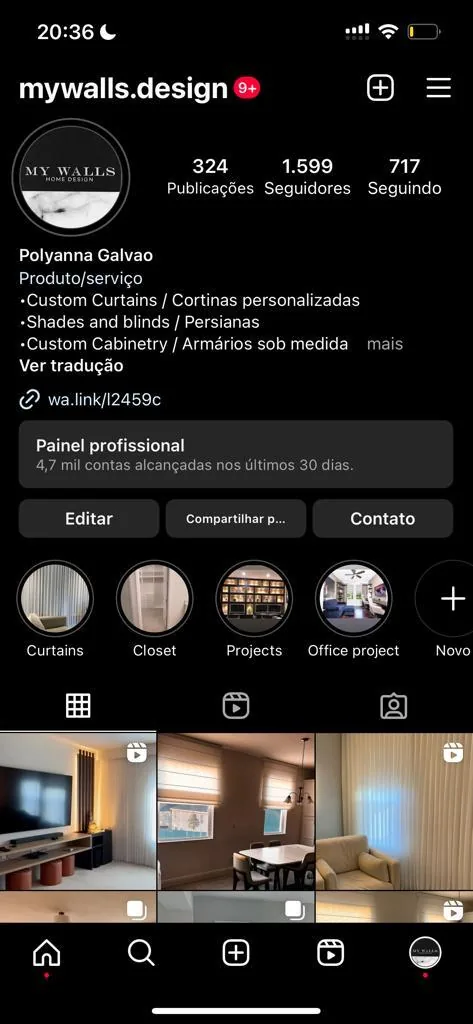
The founder ran the business herself, and clients arrived mostly through referrals and phone calls. The company already did careful, made-to-measure work with good fabrics and personal guidance at every home visit, but the Instagram showed installation photos without a consistent look, and the bio listed curtains, blinds and cabinetry side by side with no clear specialty.
The gap was between the value of the service and the way people saw it. The goal was never to make the product look more sophisticated than it was, only to make its existing sophistication visible.
2023, before
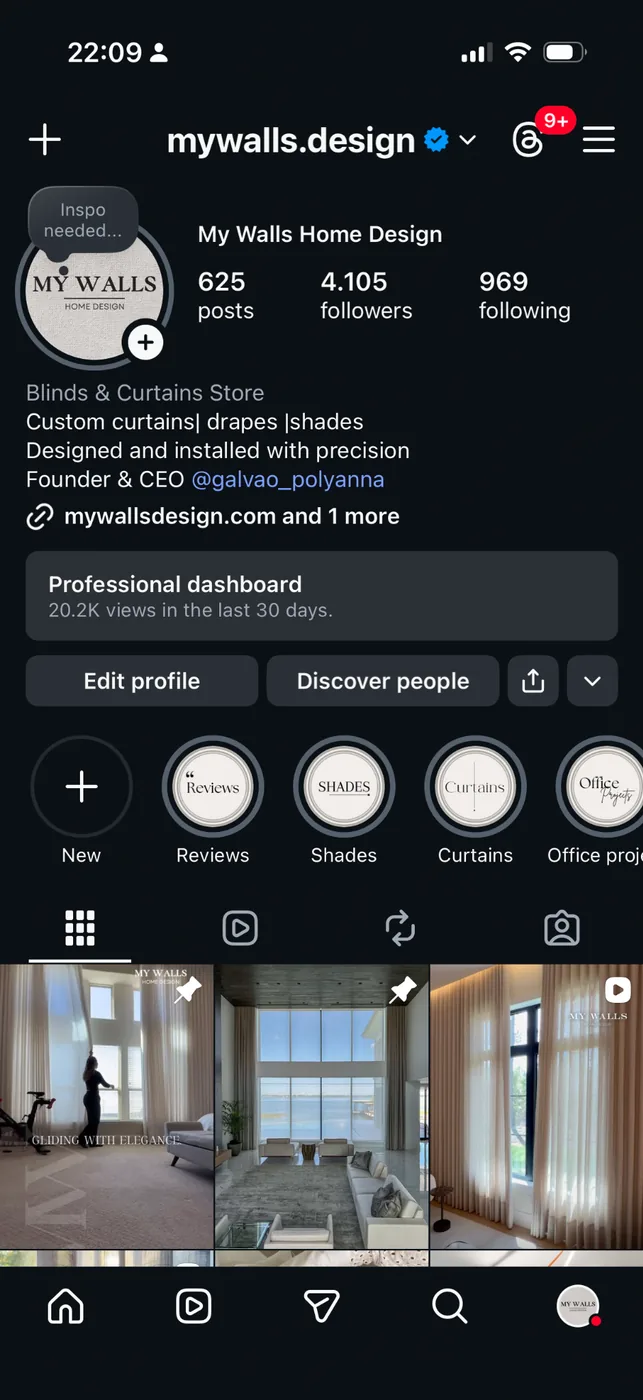
2026, after
02 / Growth
One thread became six.
Each line below is a part of the brand the work came to cover. It began with one, social media, and every year added another, so by 2026 the same language was running through six fronts at once.
- 2024Social media
- 2024Photography and voice
- 2025Sales tools
- 2025Product and packaging
- 2025Digital channels
- 2026B2B and aftercare
- Social media
Instagram and Facebook, at first with the founder’s own project photos.
- Photography and voice
On-site photo shoots, criteria for light and framing, captions written for high-end Florida homeowners, with search keywords such as custom drapery and window treatments.
- Sales tools
A client portfolio and a standard quote document that replaced prices sent over WhatsApp.
- Product and packaging
Fabric pages, hang tags with swatches, gift boxes, ribbons, stickers and thank-you cards.
- Digital channels
Visual direction for the website and consistent listings on Google, Pinterest, WhatsApp Business and Nextdoor.
- B2B and aftercare
Presentations for designers and architects, partnership materials and a follow-up structure for reviews and warranty, still being rolled out.
03 / What changed
| Area | Before | After |
|---|---|---|
| Positioning | A broad list of home services | Focused on custom drapery, quality, personalization and the client experience |
| Identity | A logo with no visual system around it | The same logo, refined and vectorized, inside a consistent visual language |
| Content | Installation photos and basic posts | Photo direction, storytelling, education and search-friendly captions |
| Sales | Personal service and prices sent over WhatsApp | Client portfolio, standard quote, presentations and sales materials |
| Experience | Few planned touchpoints | Packaging, swatches, tags, gifts and aftercare materials |
Working inside a real constraint.
The founder has a strong personal attachment to the original logo, so it stayed. It was vectorized and harmonized within the limits she approved, and the consistency came from photography, typography, language and the way the brand is applied, which is often the real brief in a small business.
04 / Sales tools
Printed pieces that explain the service.
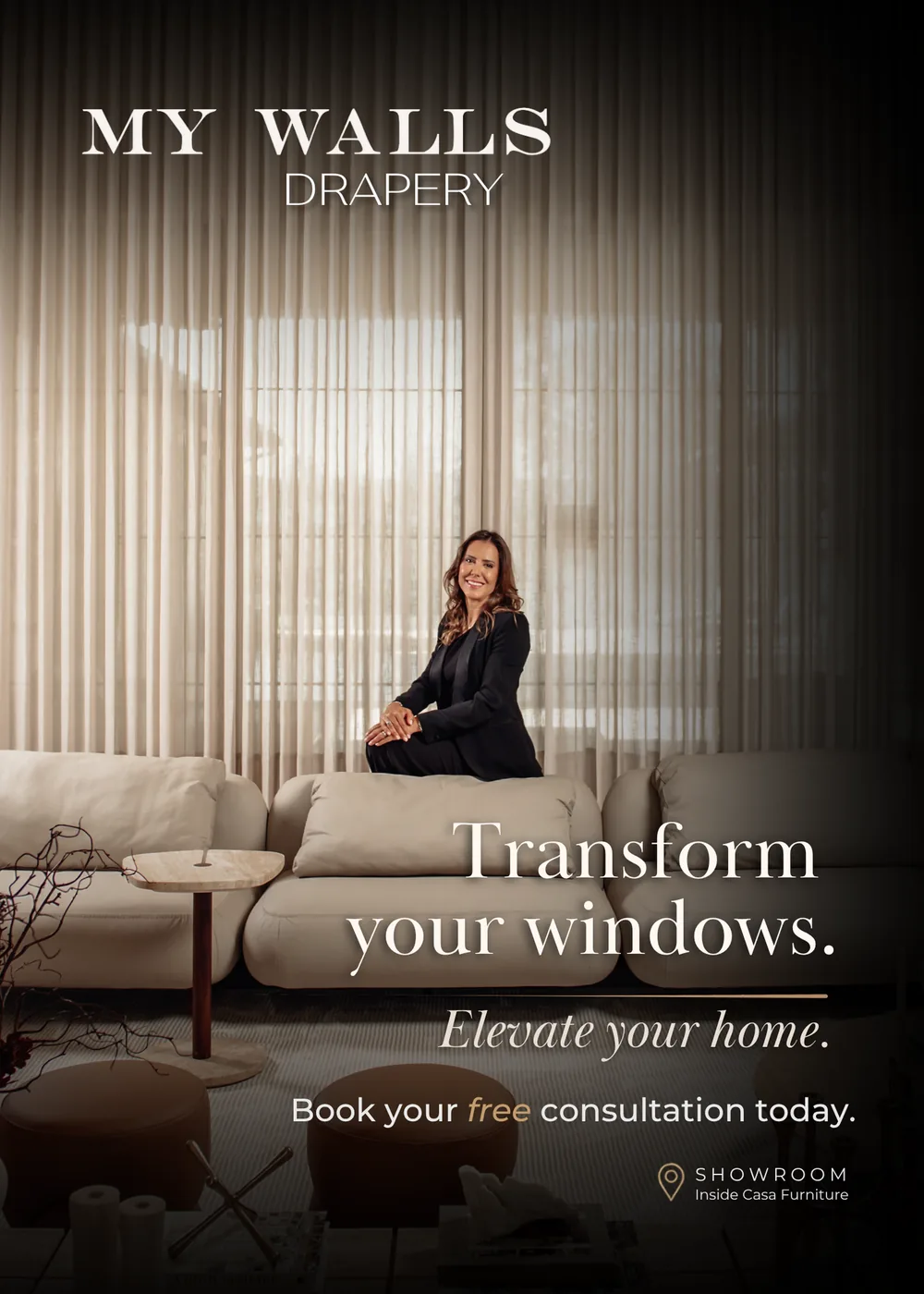
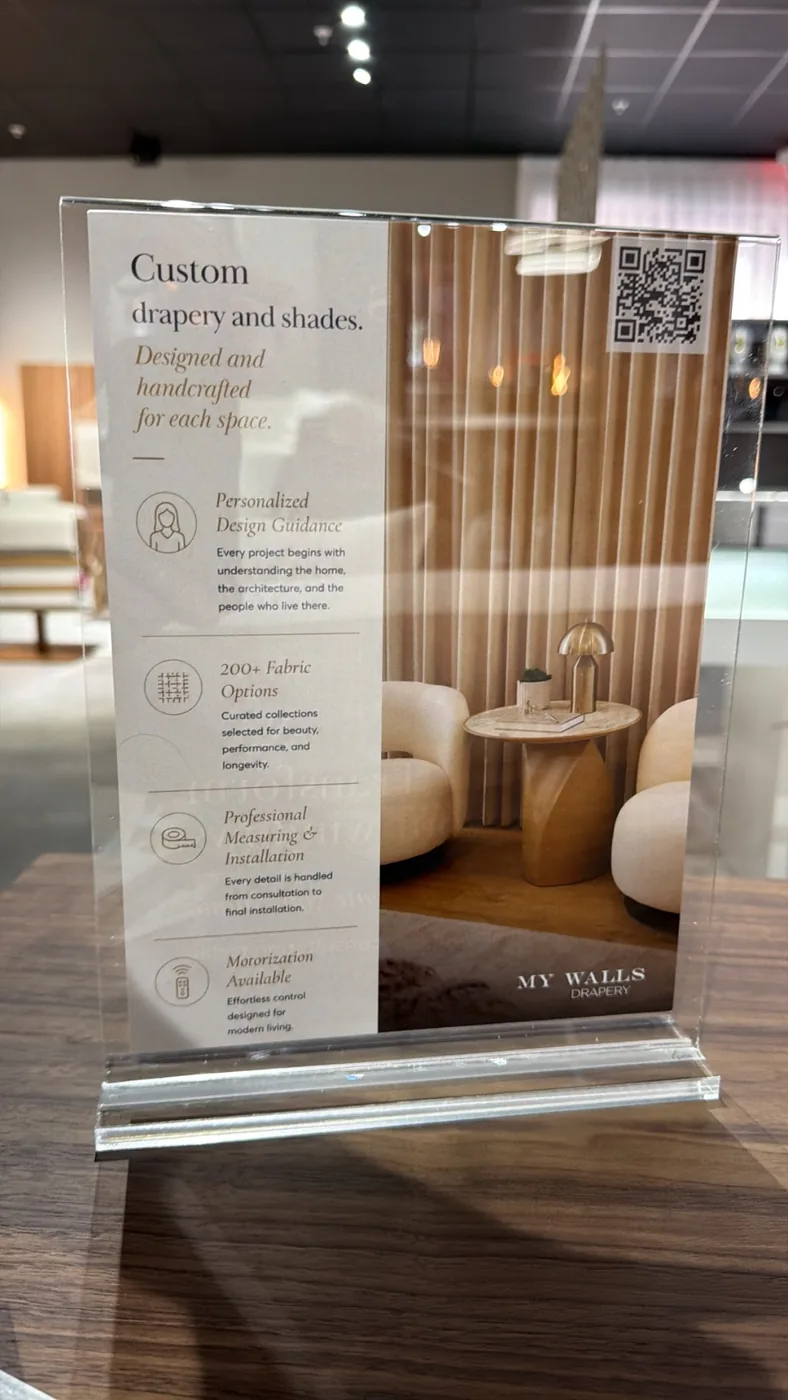
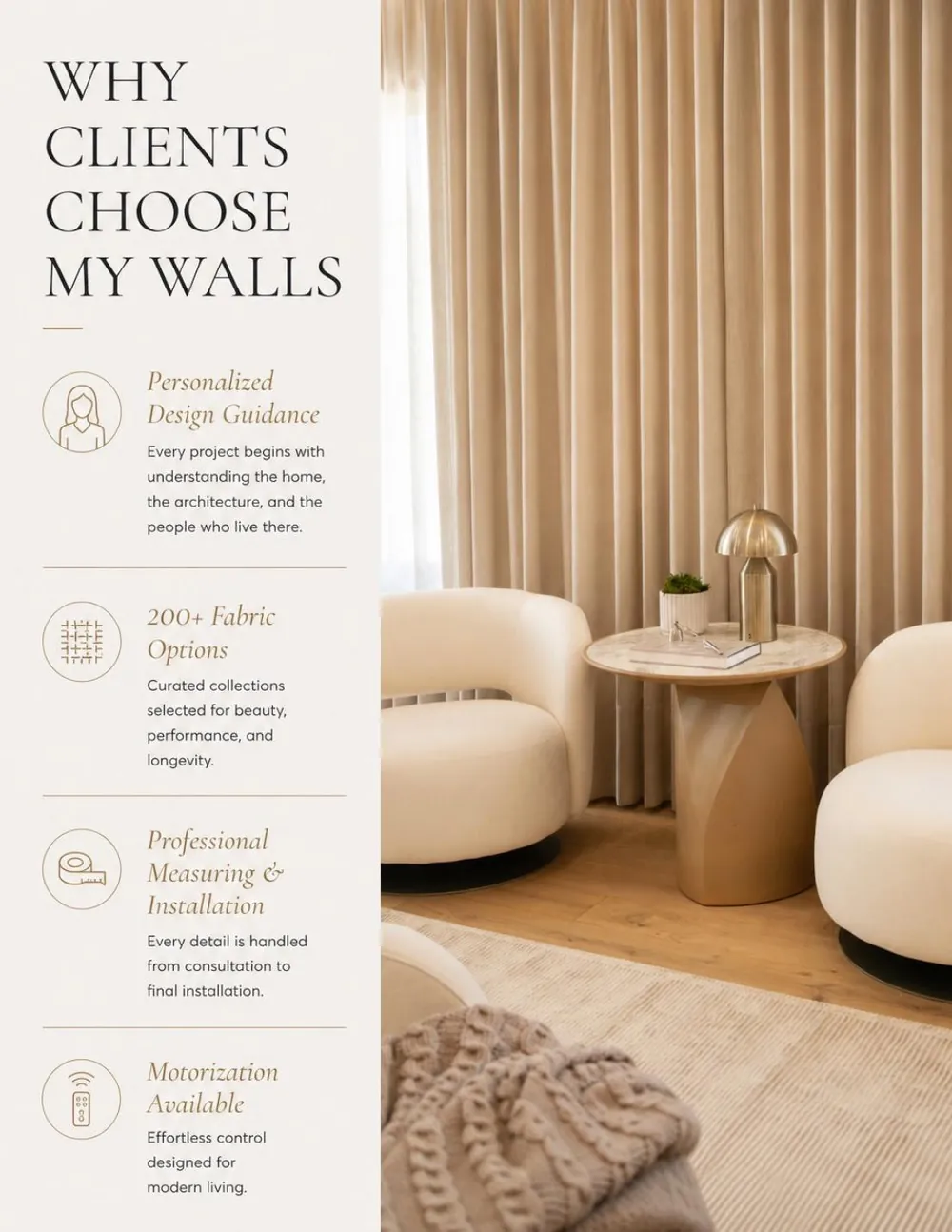
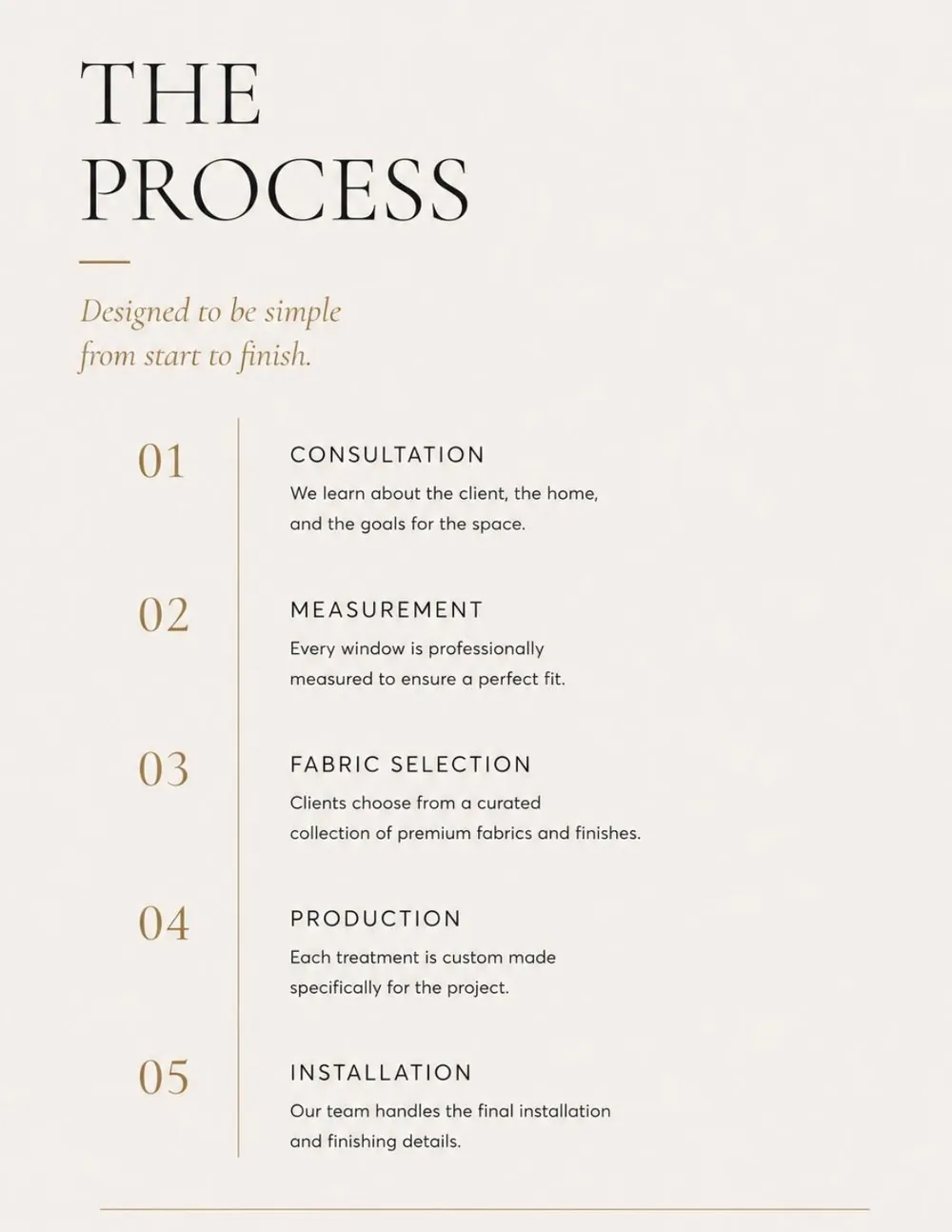
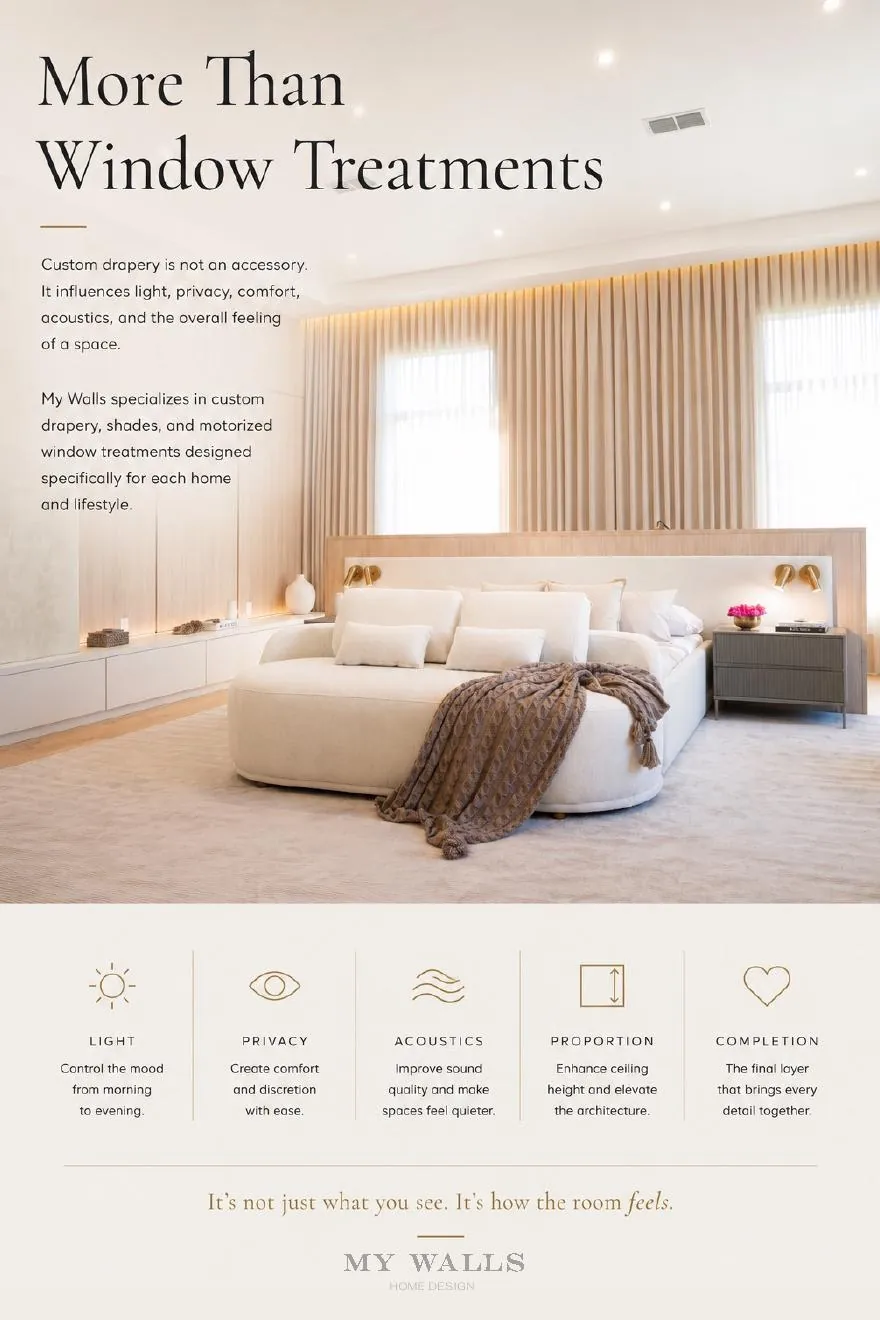
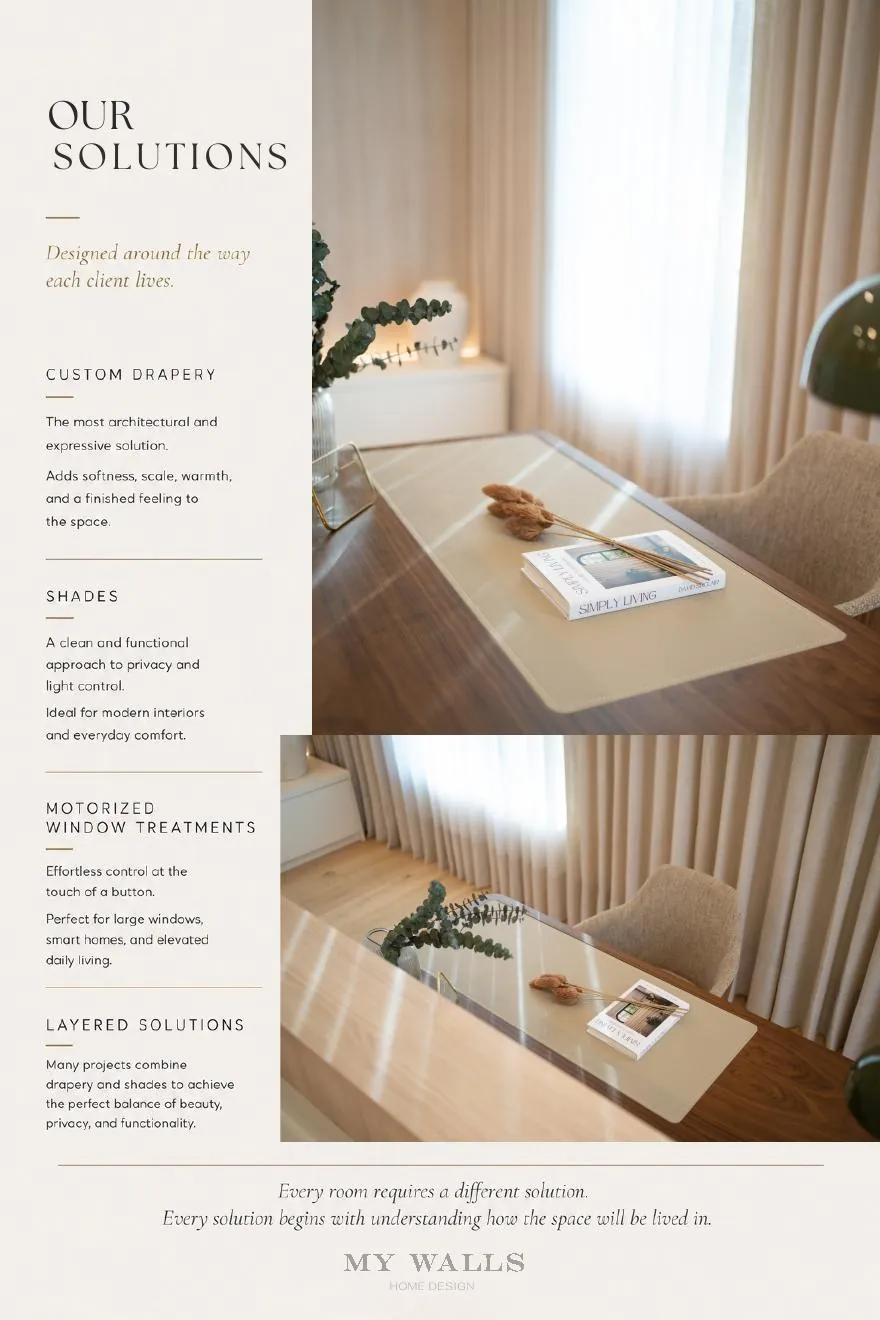
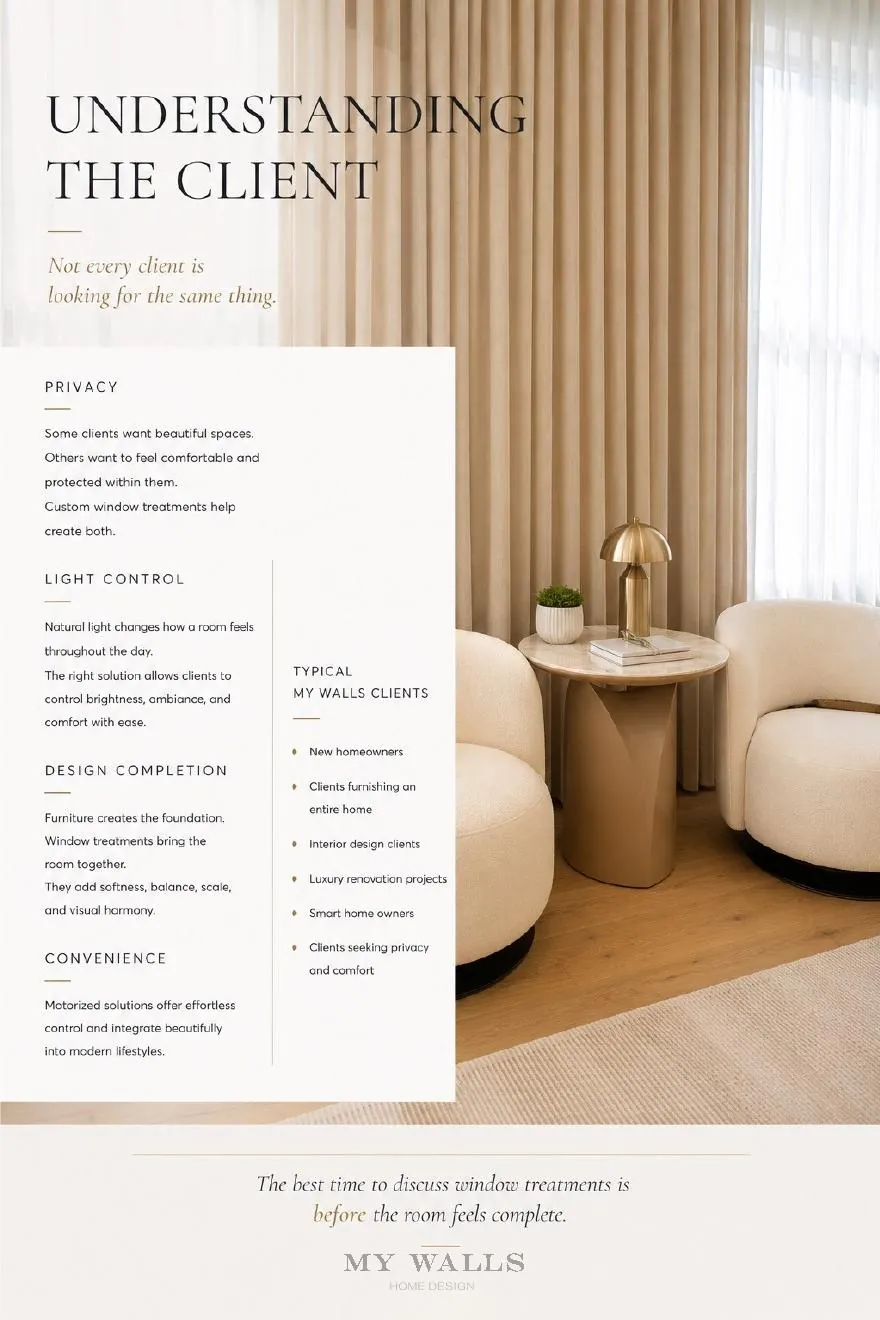
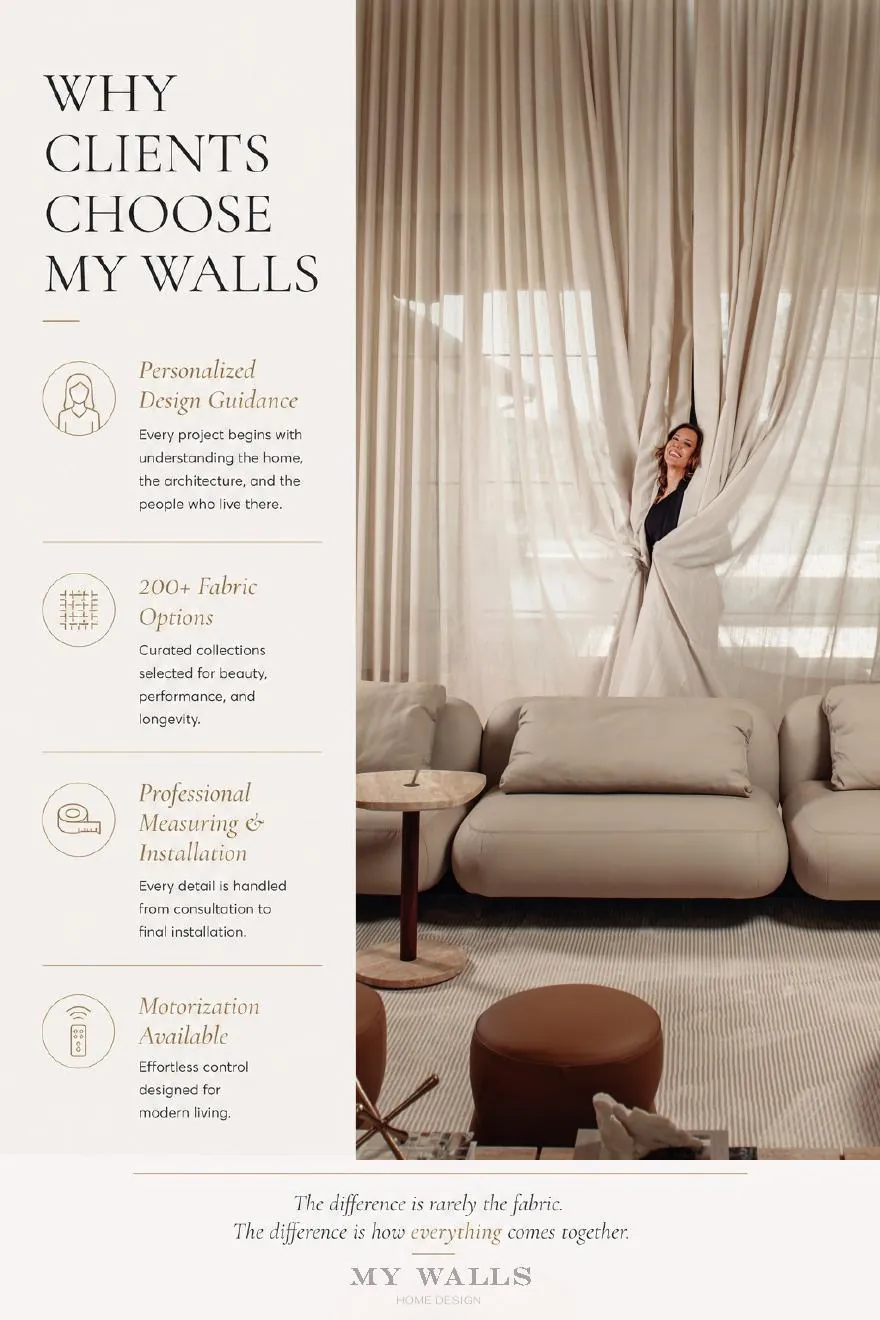
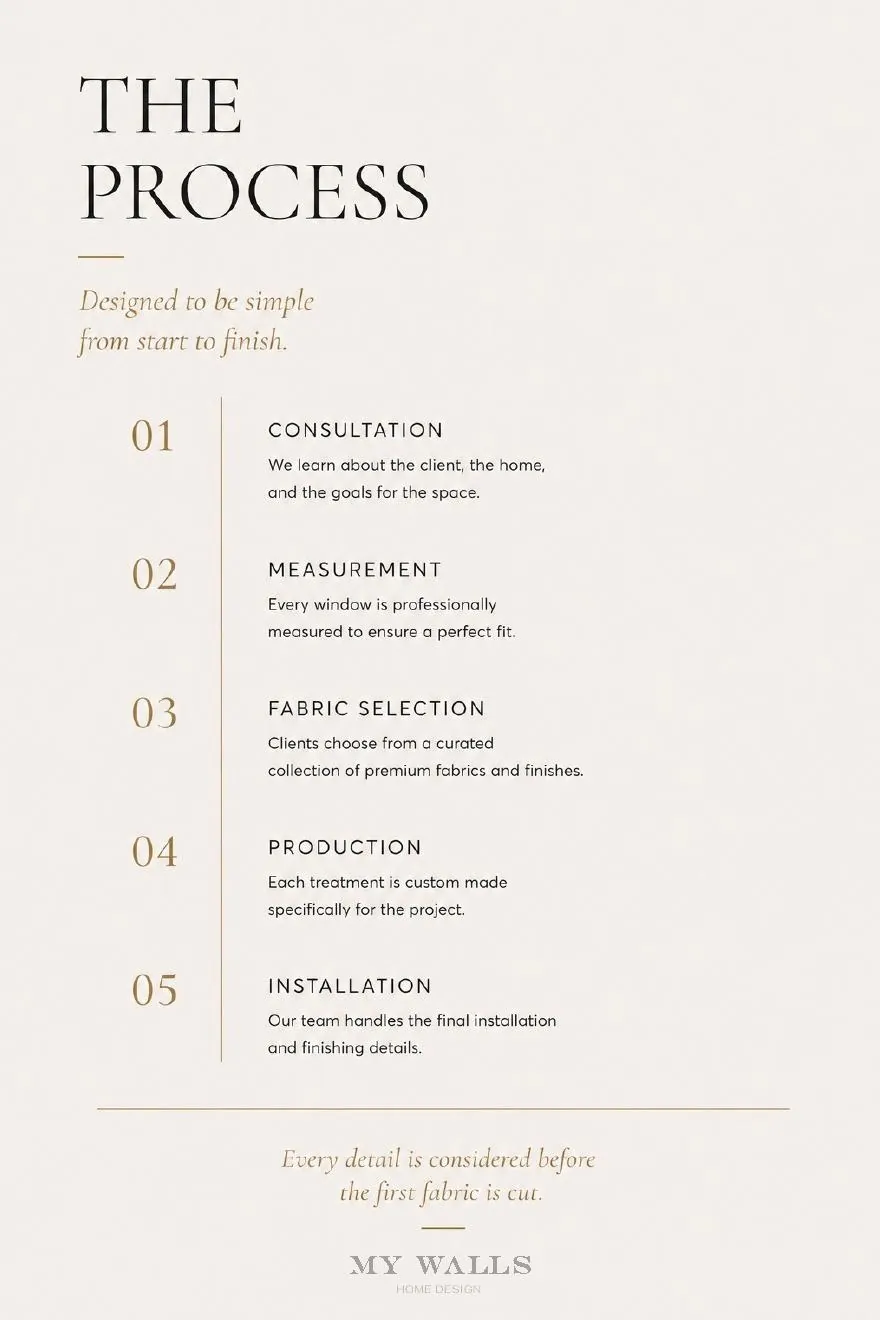
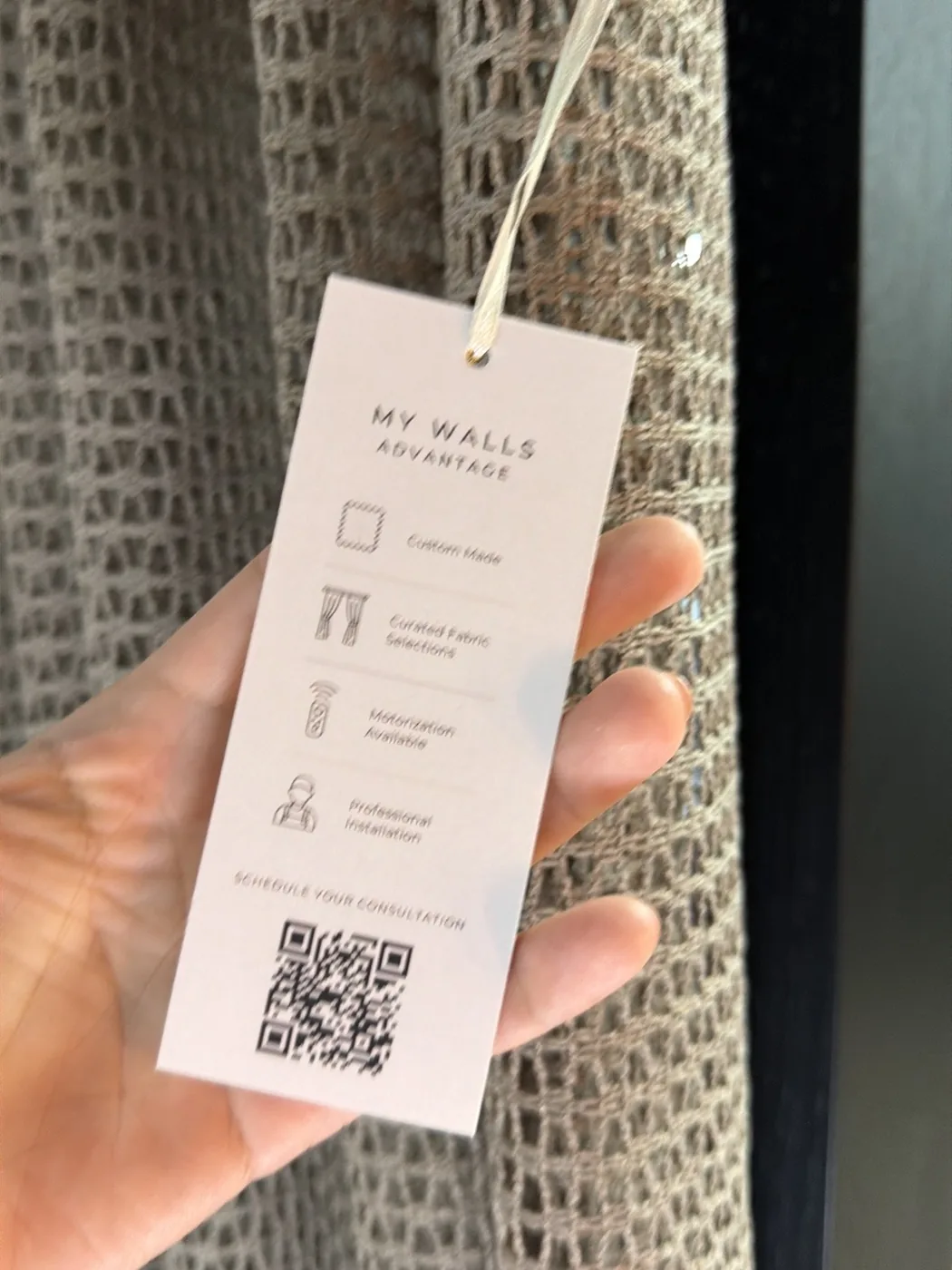
The printed materials answer the questions a client asks before booking: what makes the work custom, how many fabrics there are, who measures and installs, and whether motorization is available. Each one ends with a QR code to book a consultation.
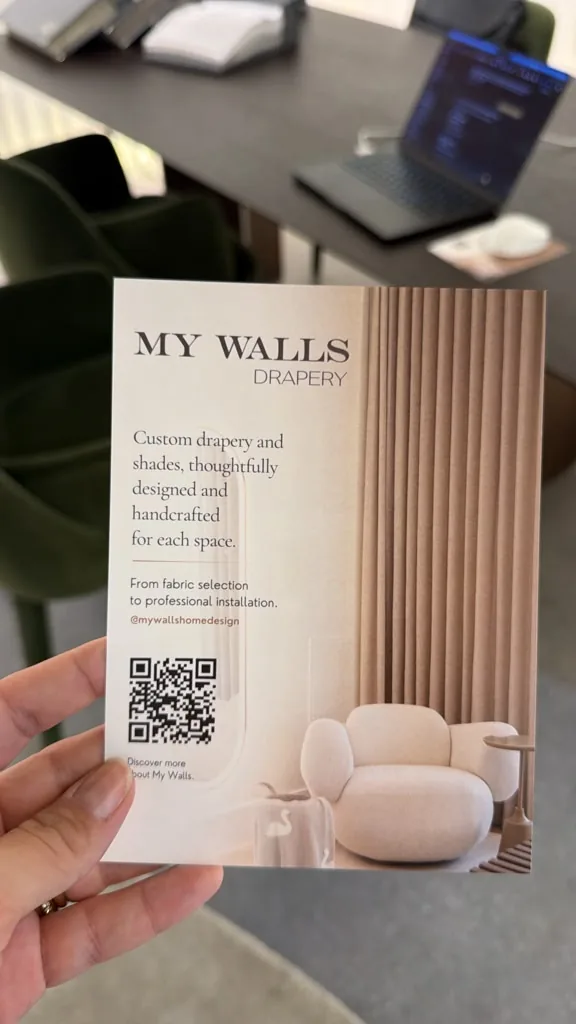
From the first portfolio to the current deck.
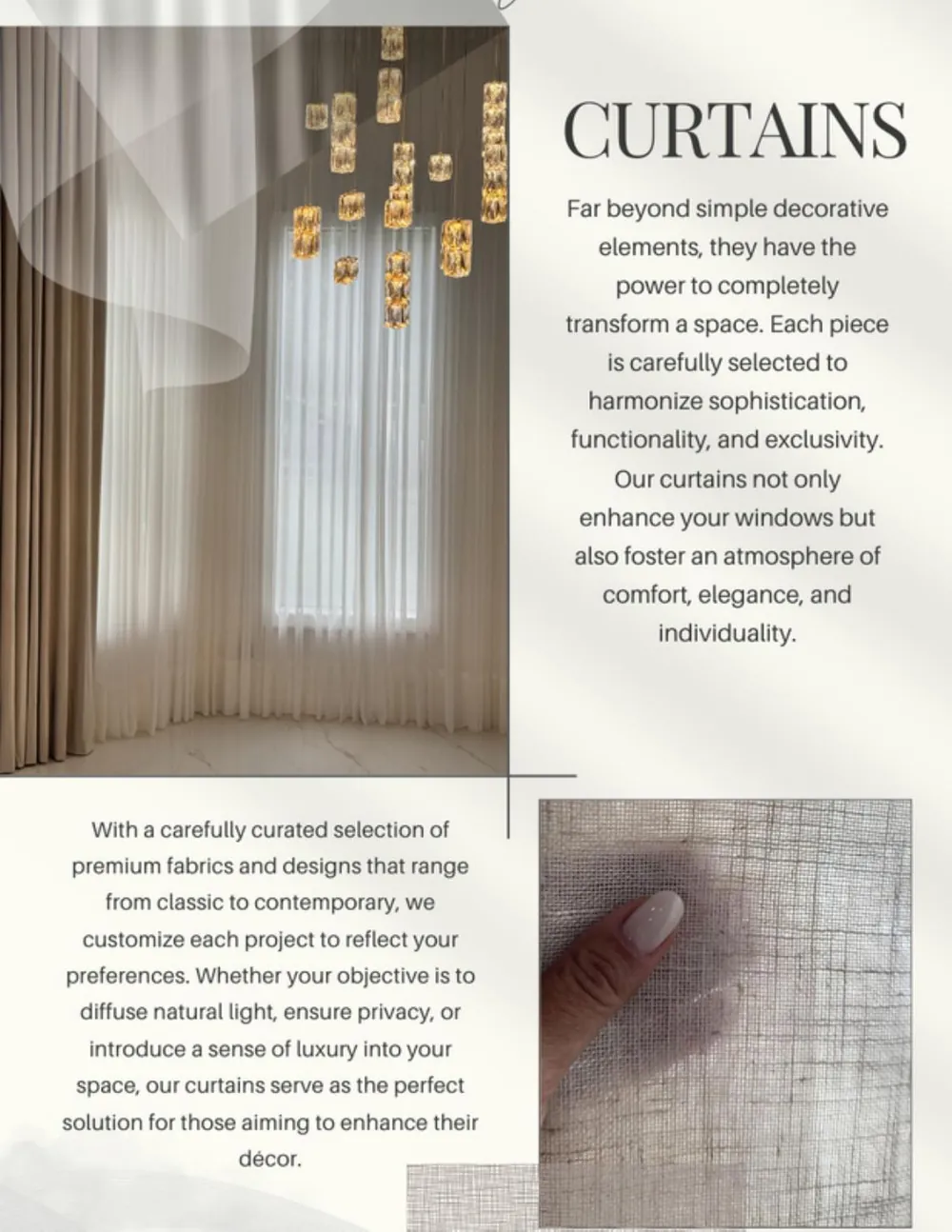
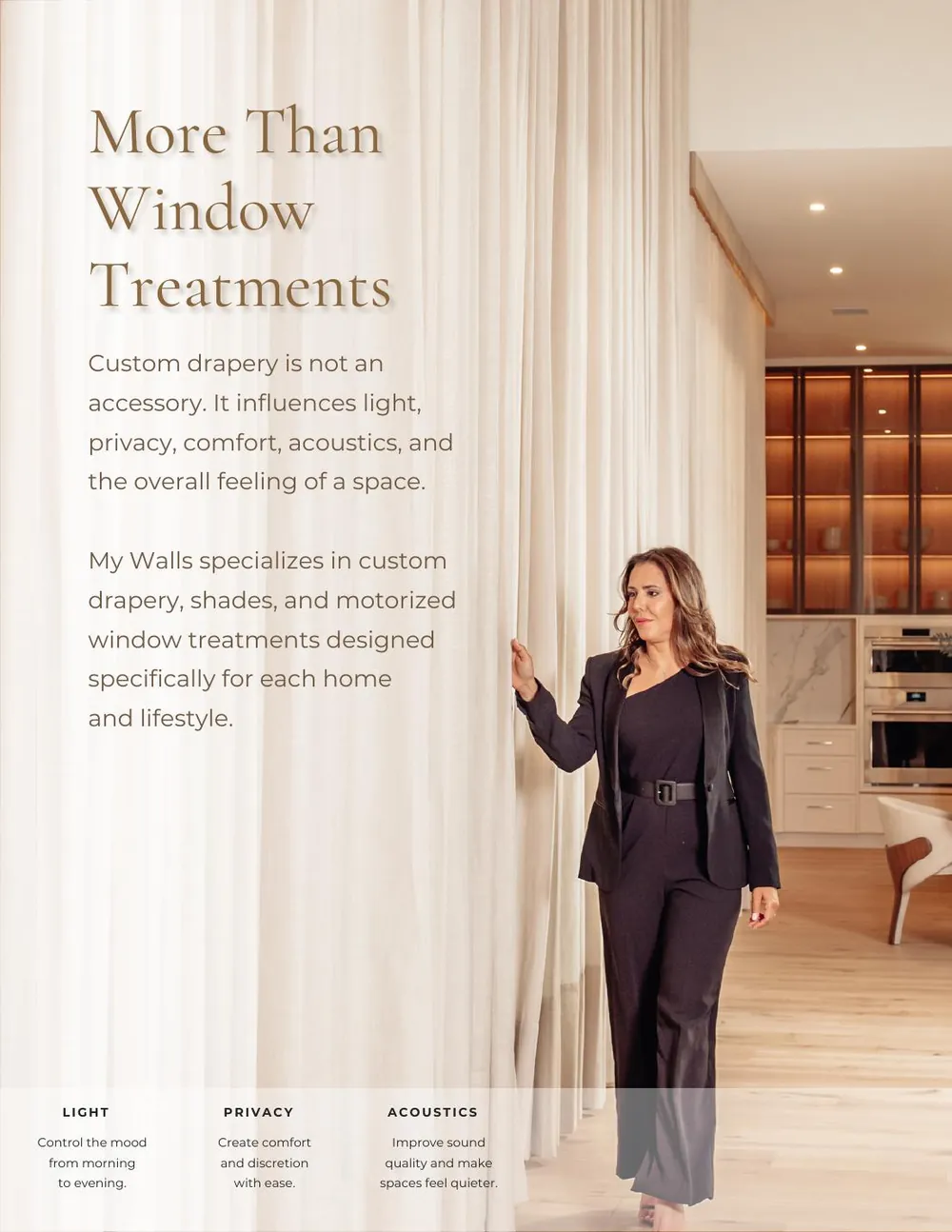
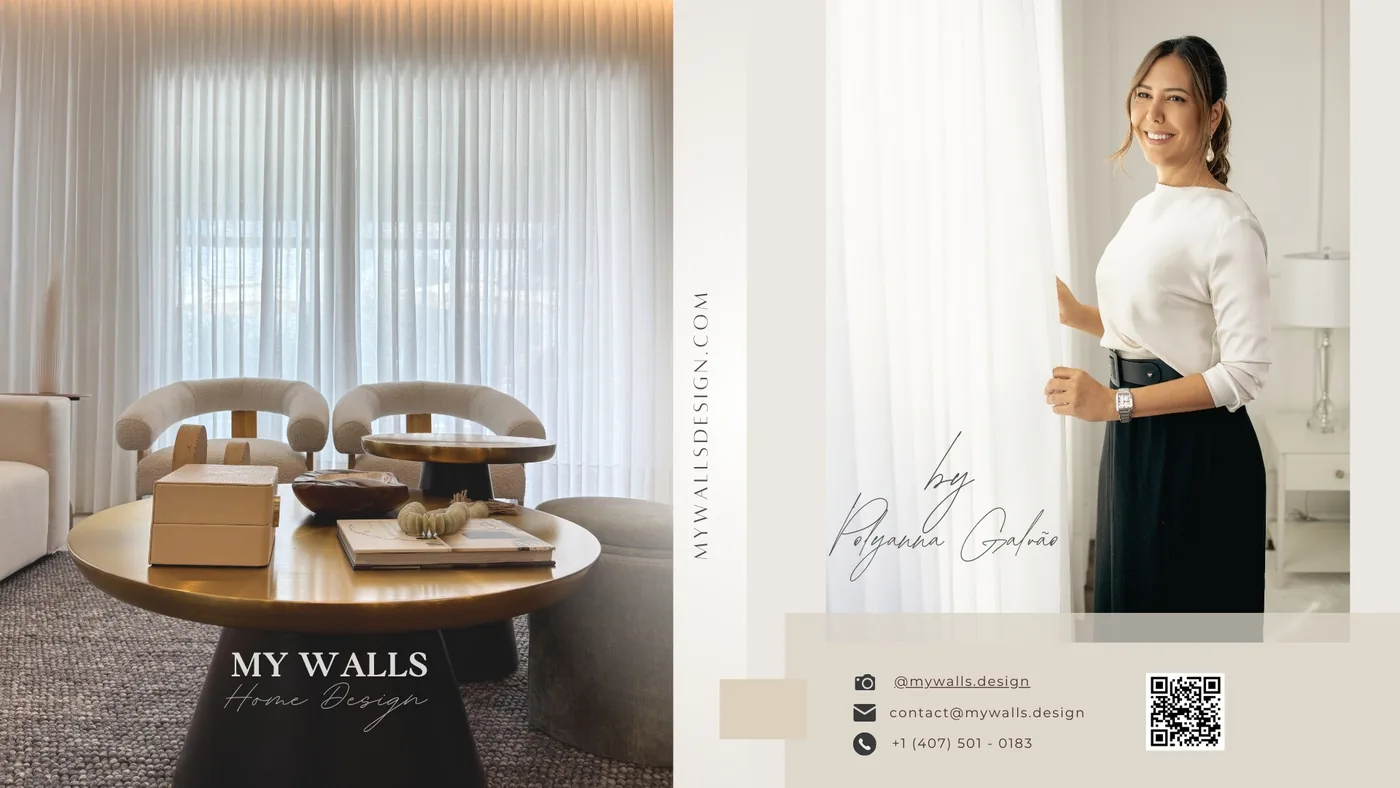
The first client portfolio was the first piece built beyond social media, with concept, structure, image selection, copy and layout. The current brand deck keeps the same story but says it with more restraint: fewer textures, one typeface family, larger photographs and copy that explains what each solution does for light, privacy and comfort.
First client portfolio

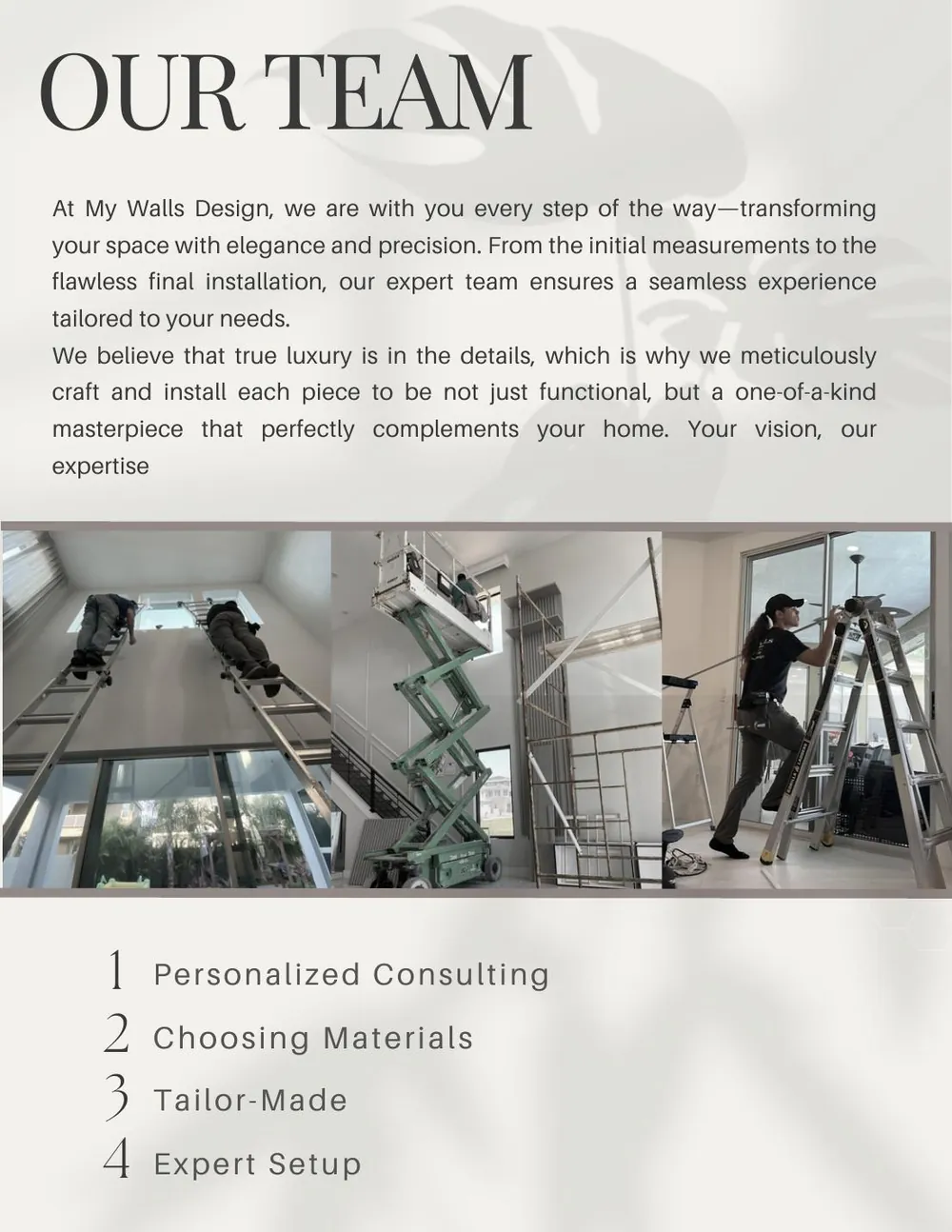
Current brand deck
Measuring guide.
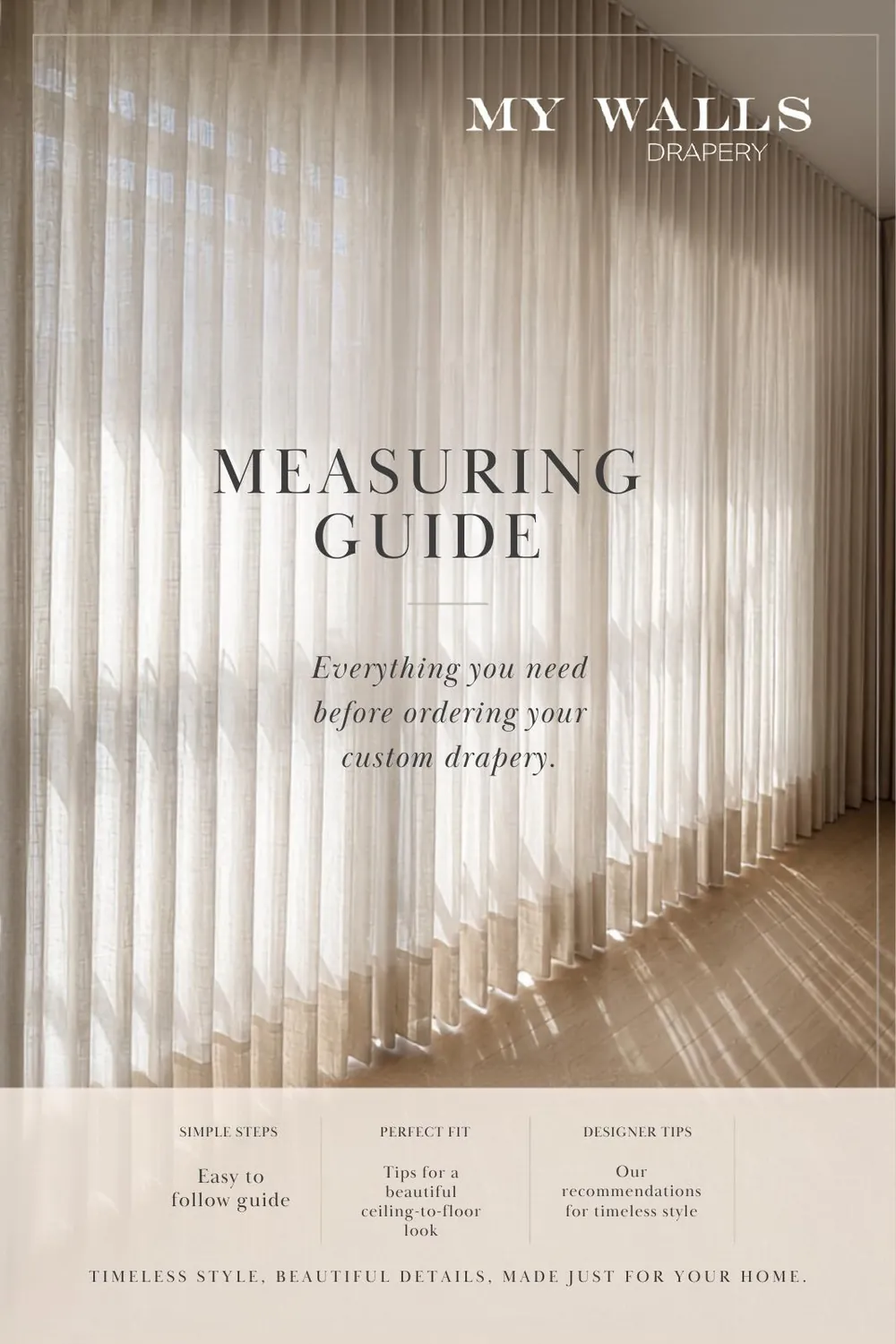
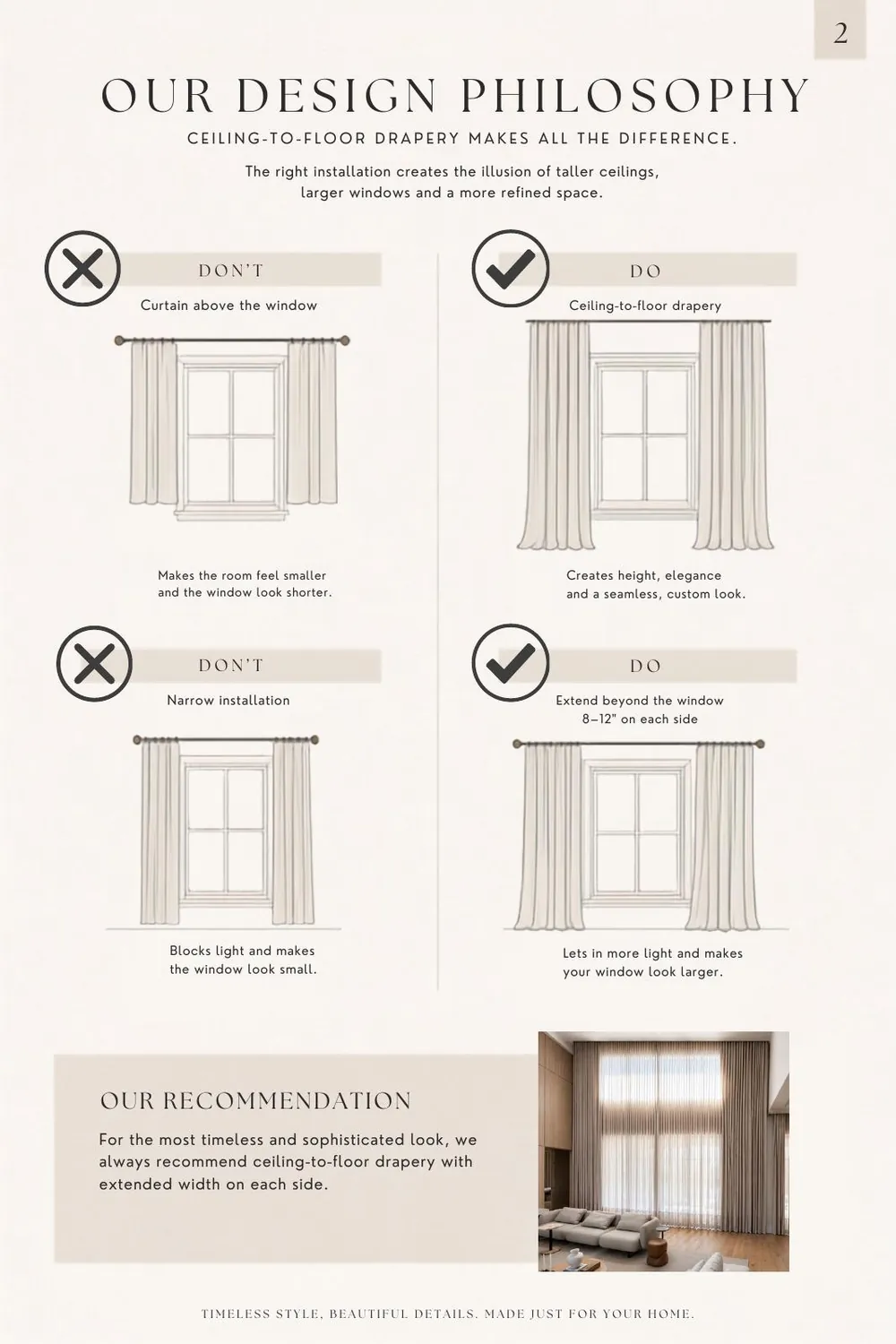
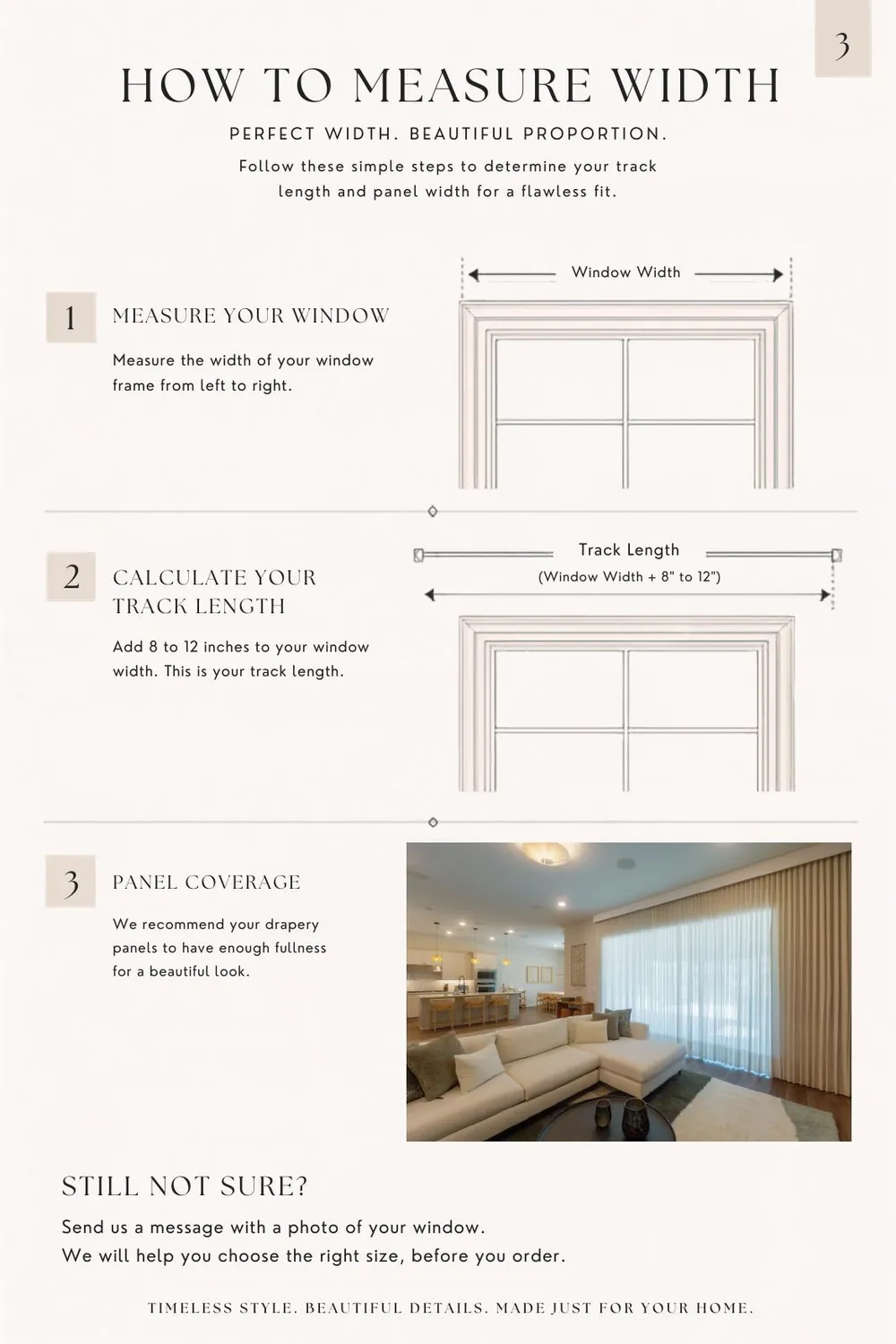
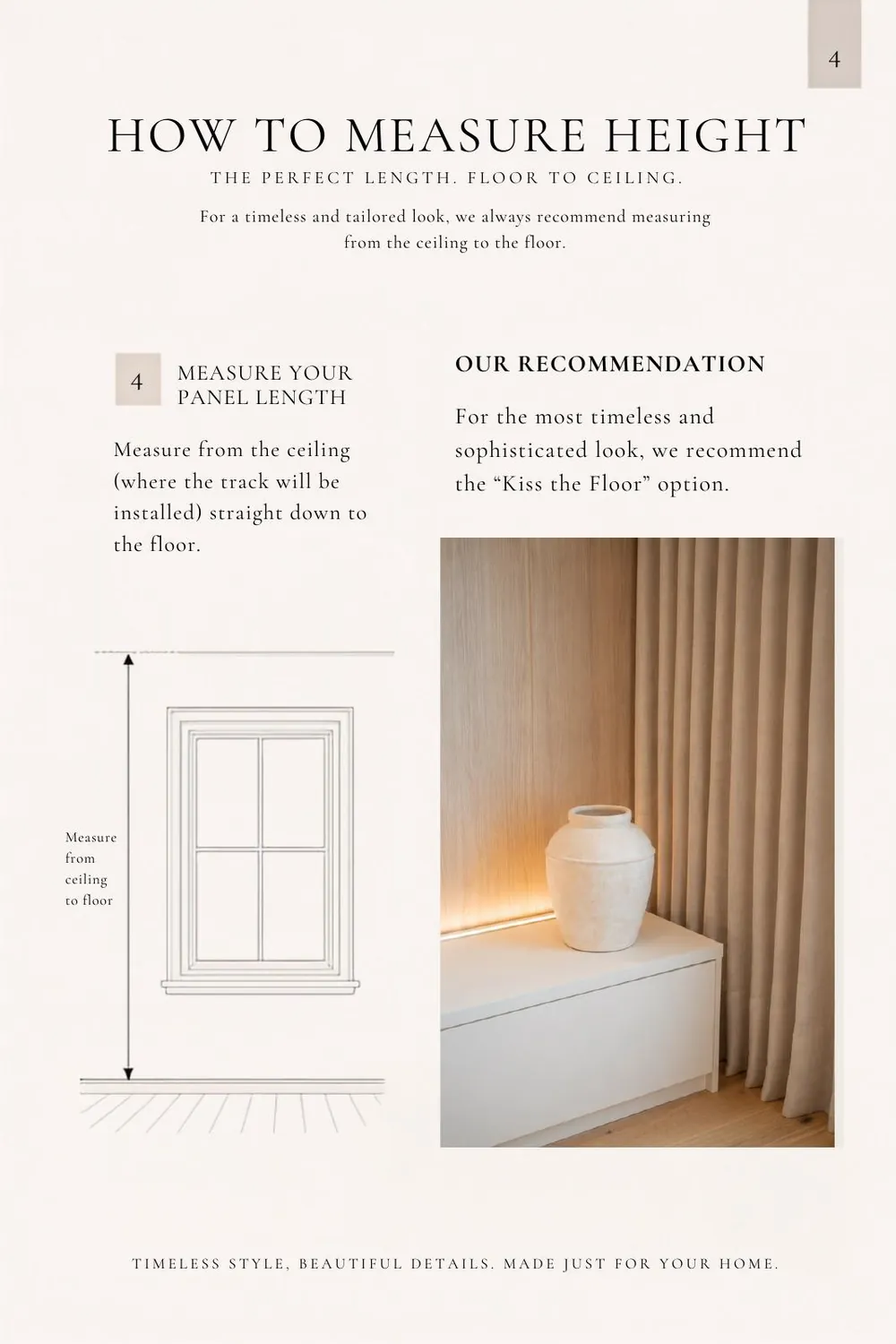
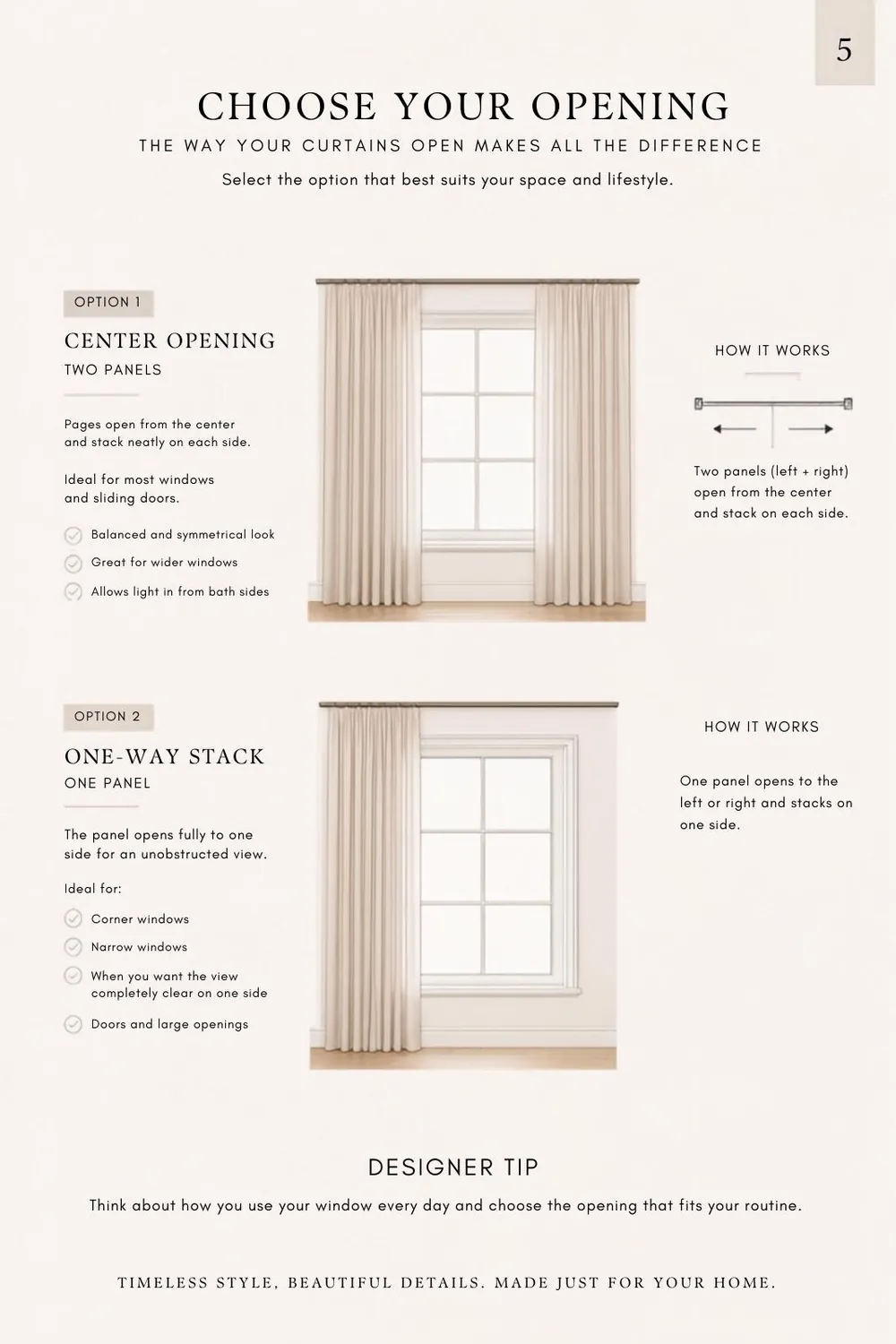
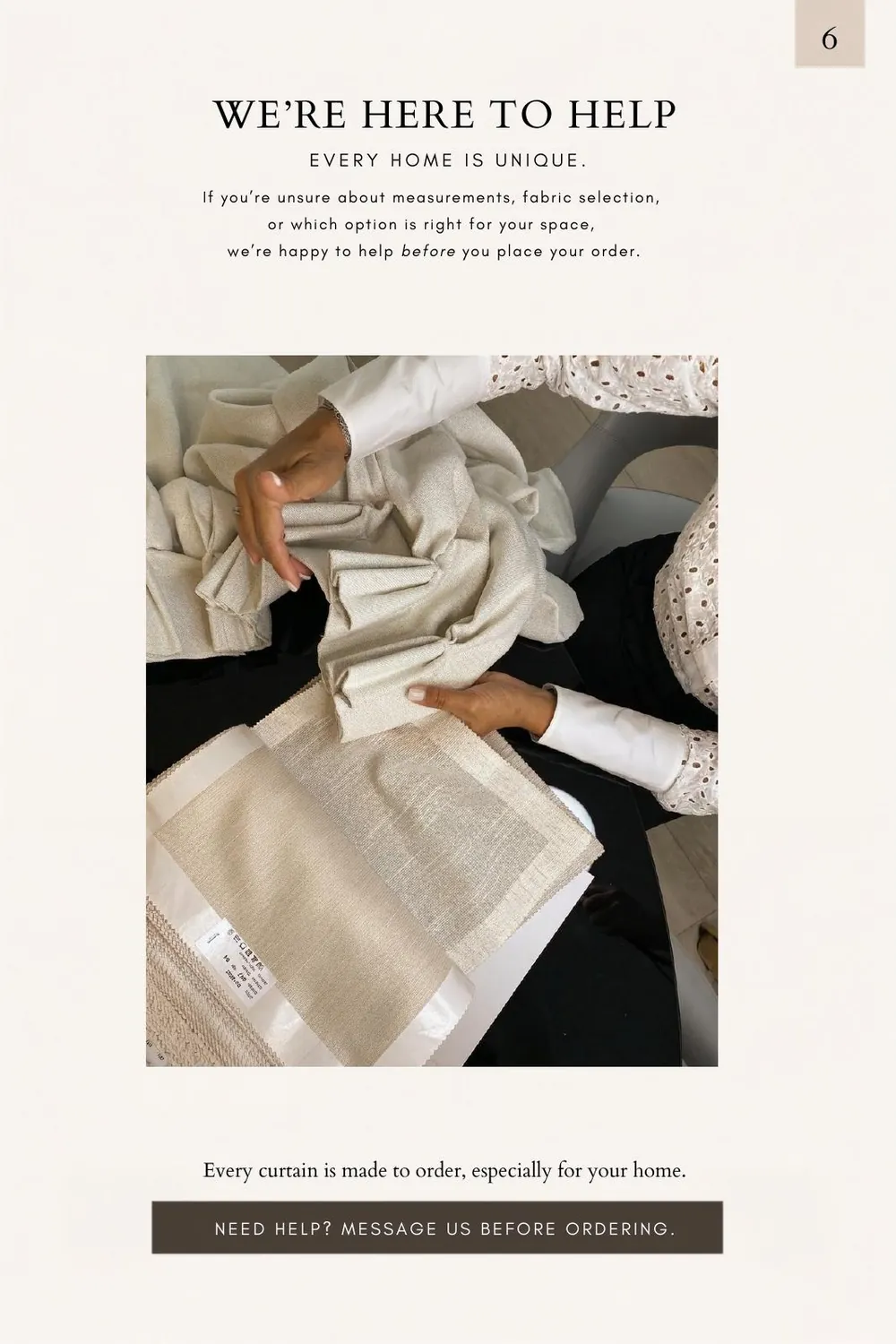
Ordering custom drapery scares people because they are afraid of measuring wrong. The six-page guide turns that fear into a few clear steps, with do and don’t comparisons for ceiling-to-floor drapery, diagrams for width and height and a last page that invites them to send a photo before ordering.
05 / Trade
The same language, for professionals.
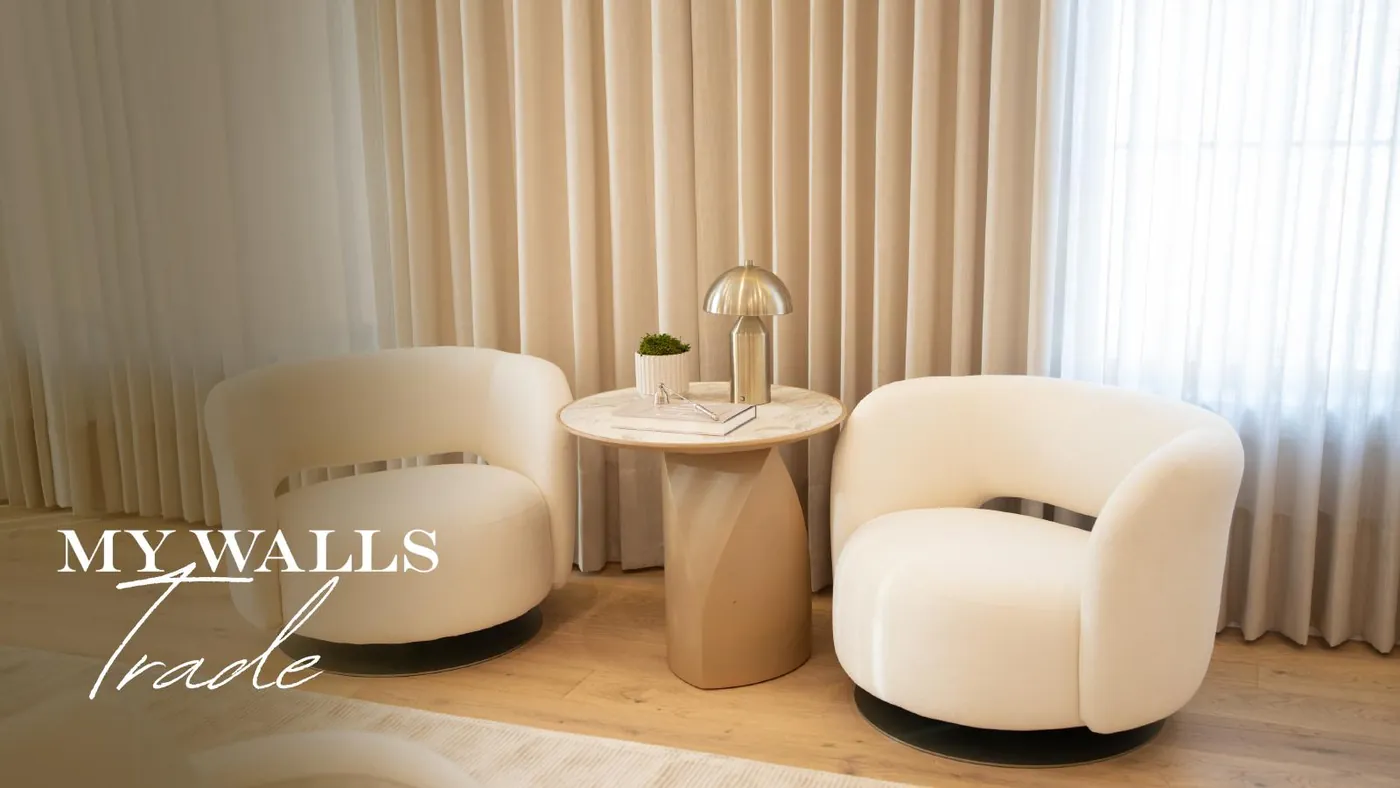
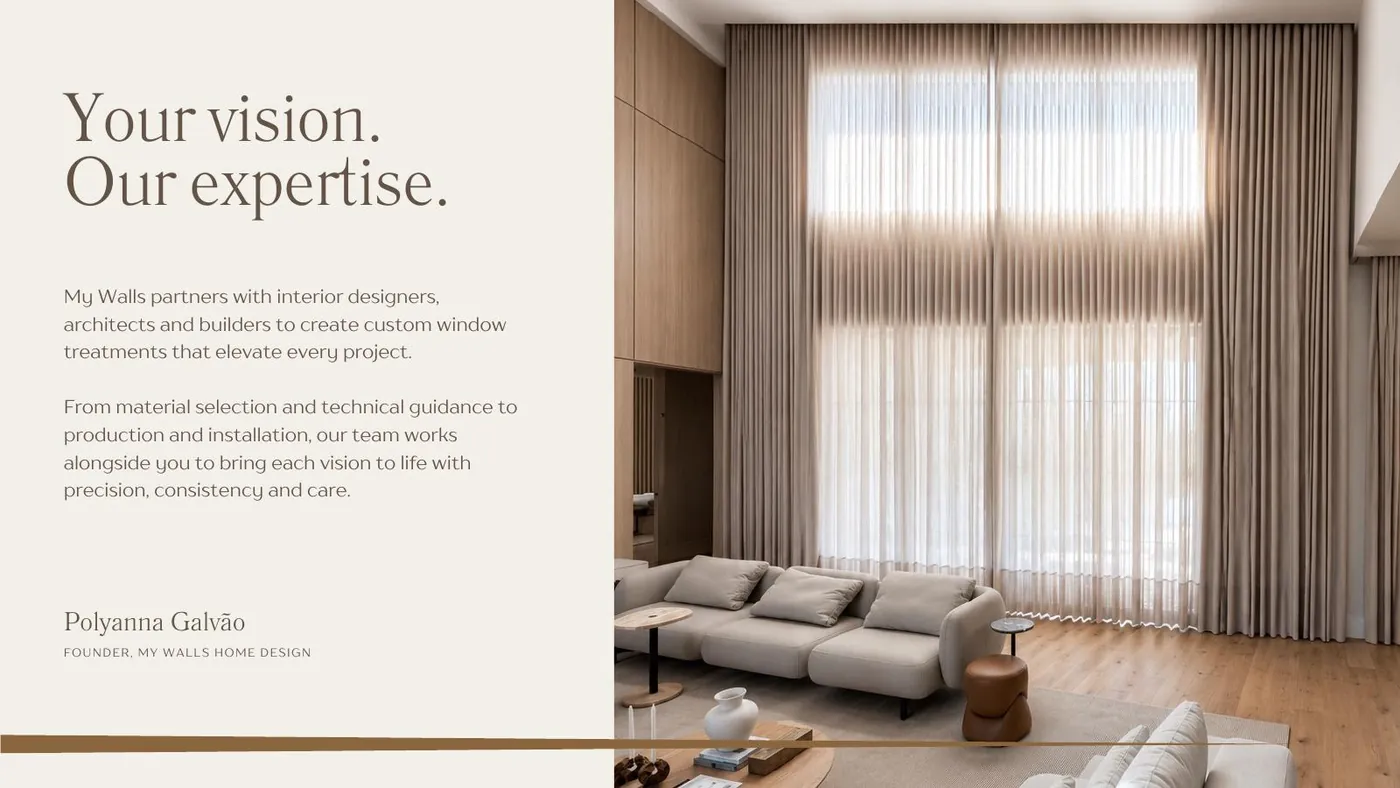
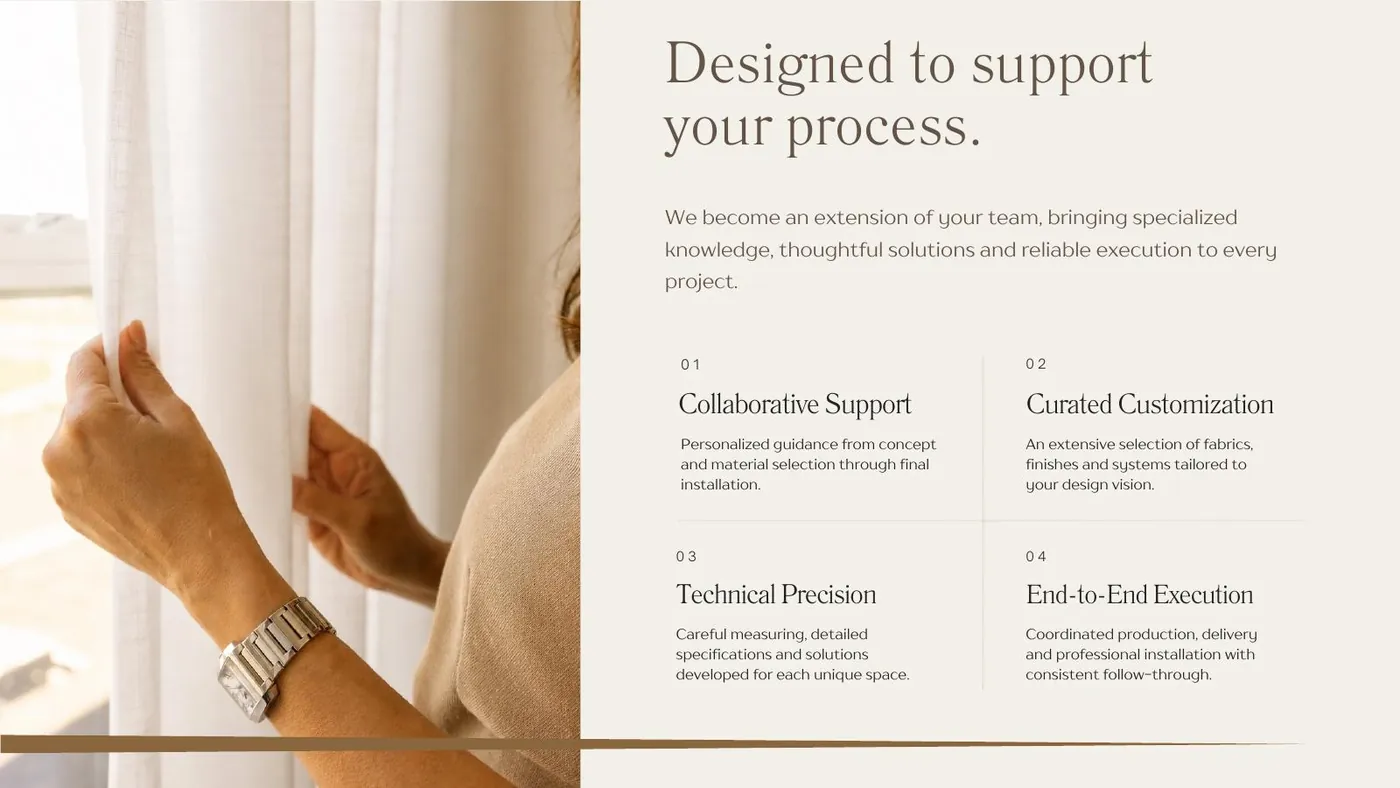
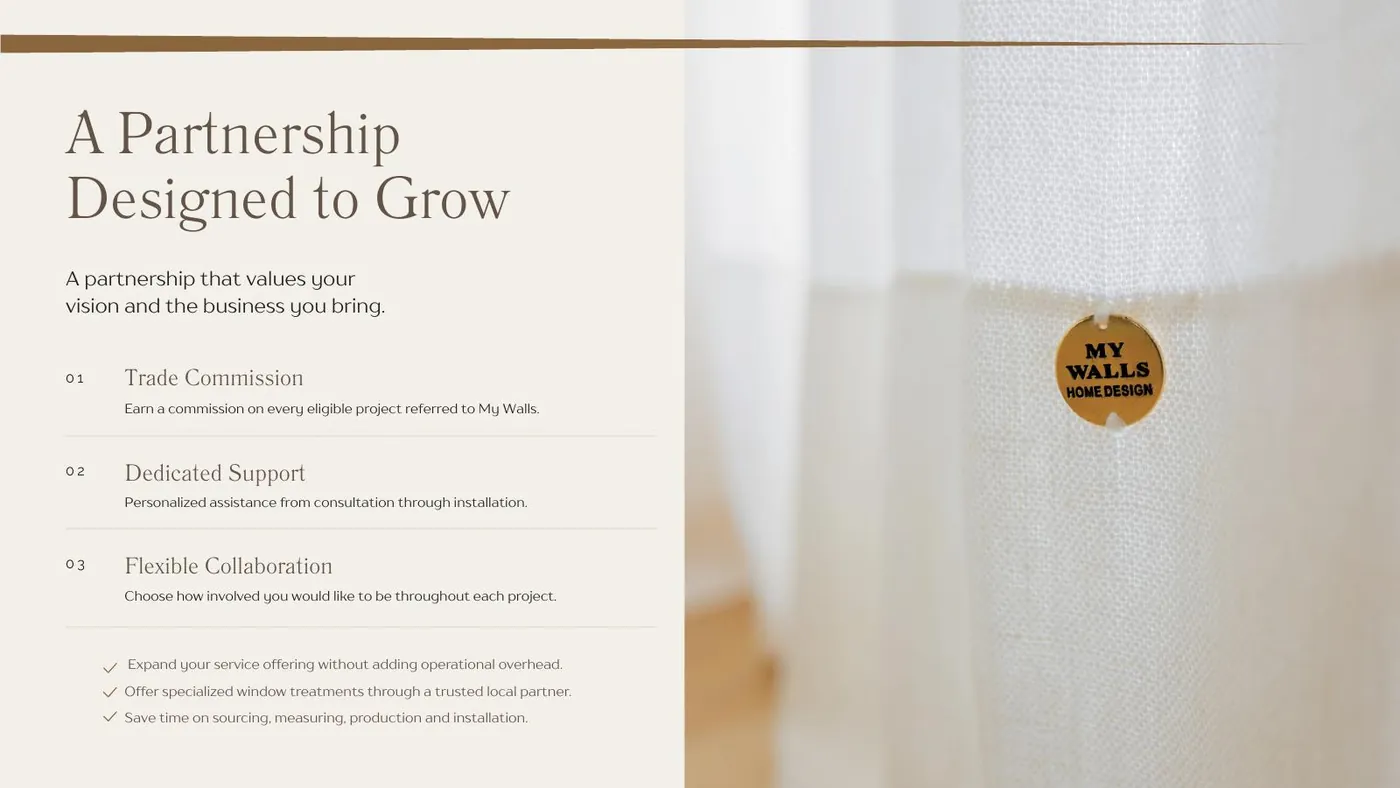
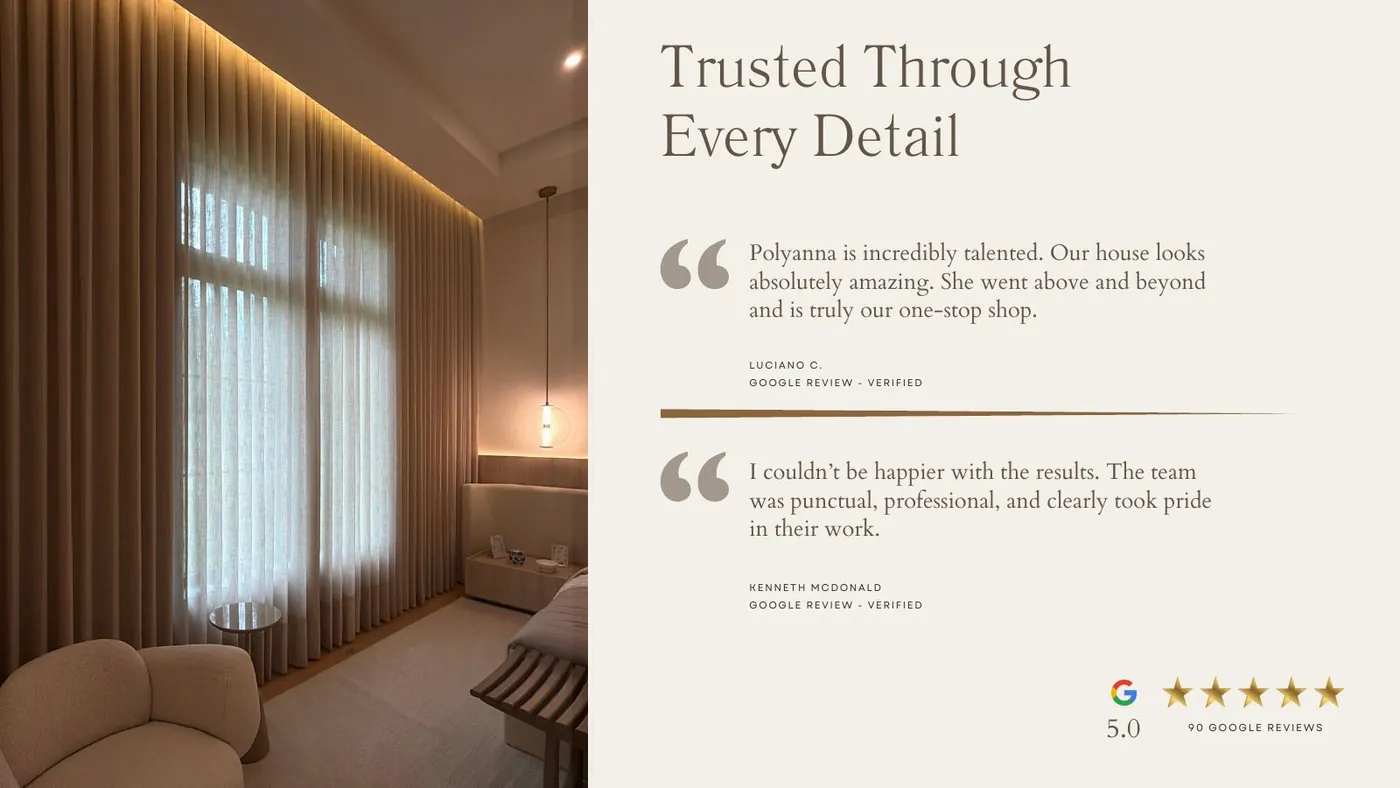
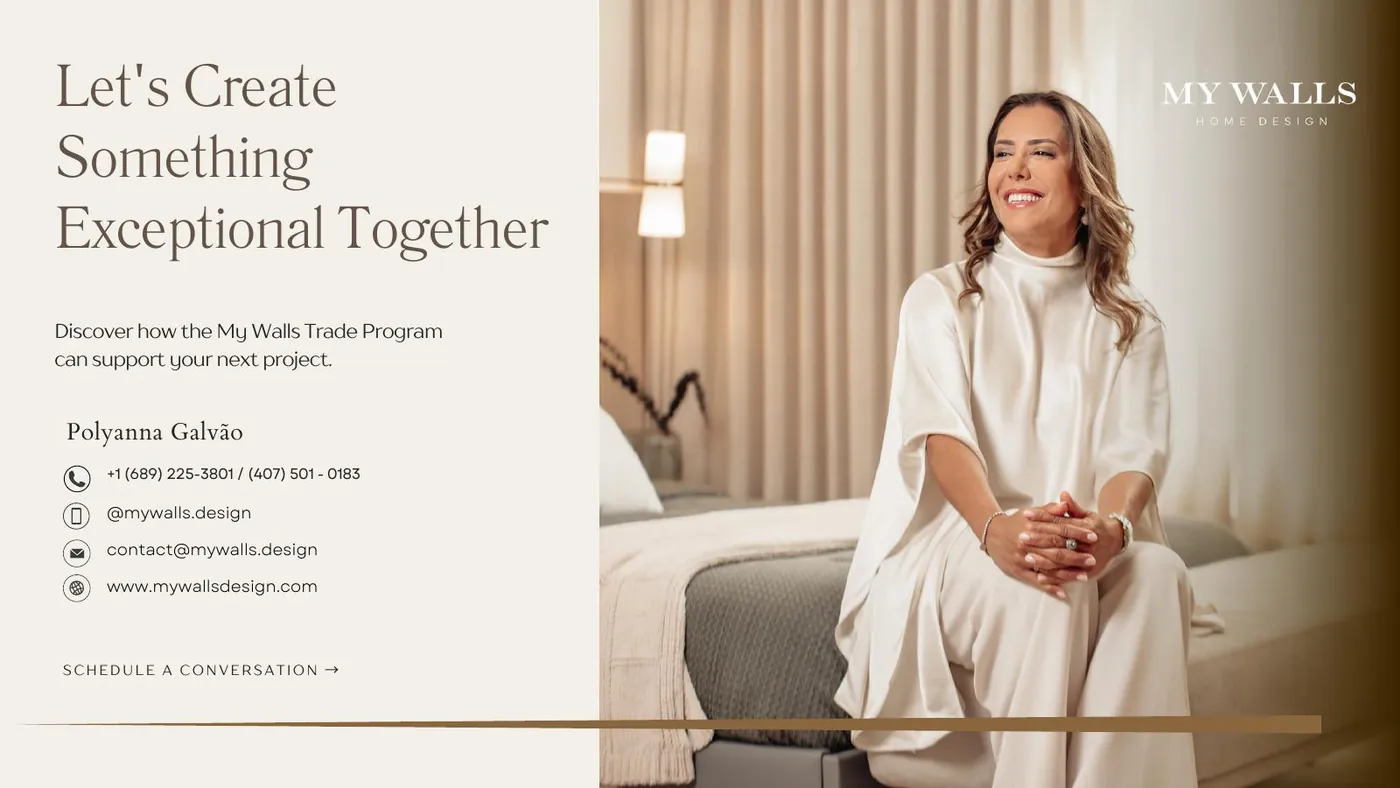
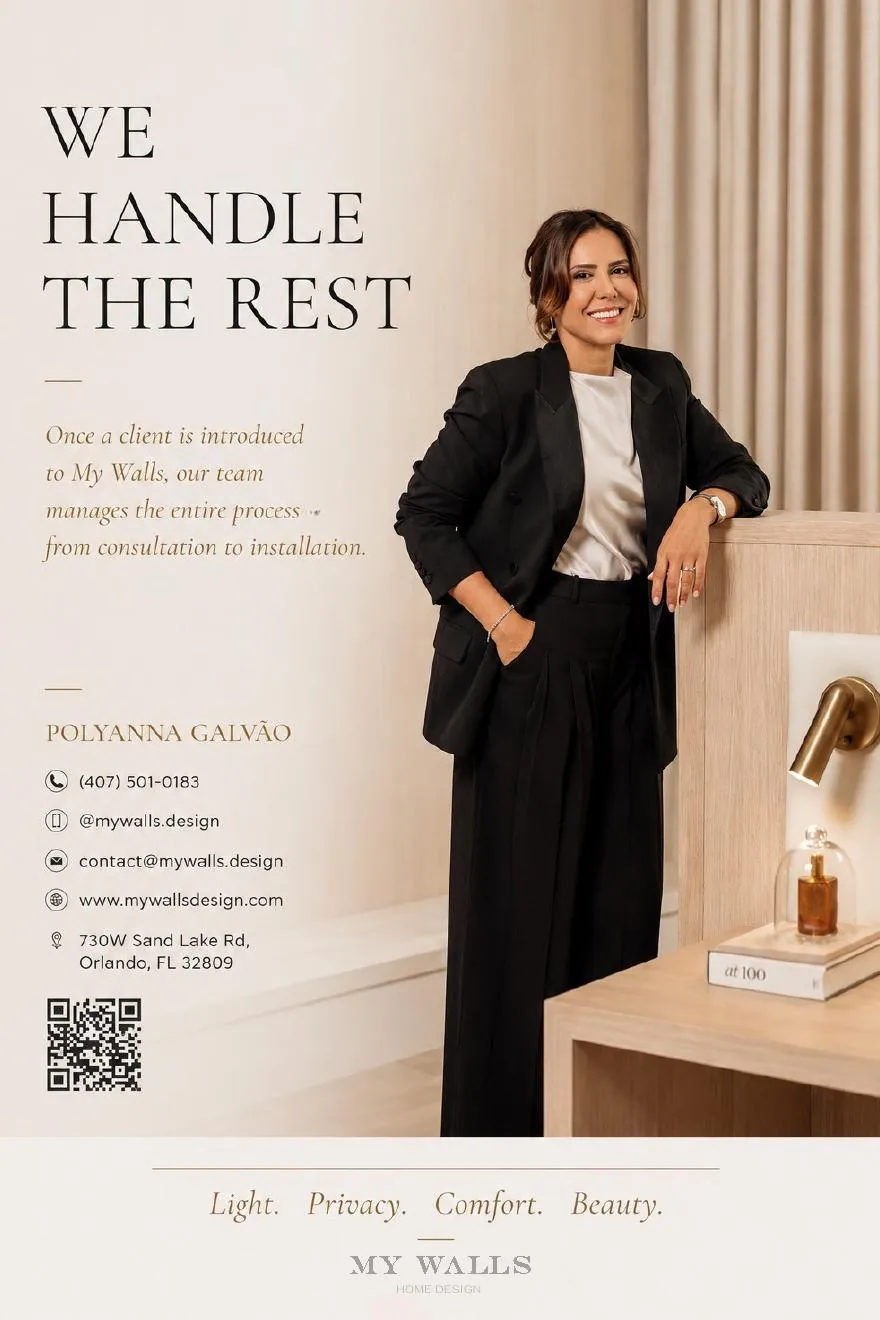
In 2026 the founder asked for materials aimed at interior designers, architects and builders. The trade presentation keeps the brand’s tone but speaks to a professional’s needs, covering specifications, technical precision, end-to-end execution and a referral commission.
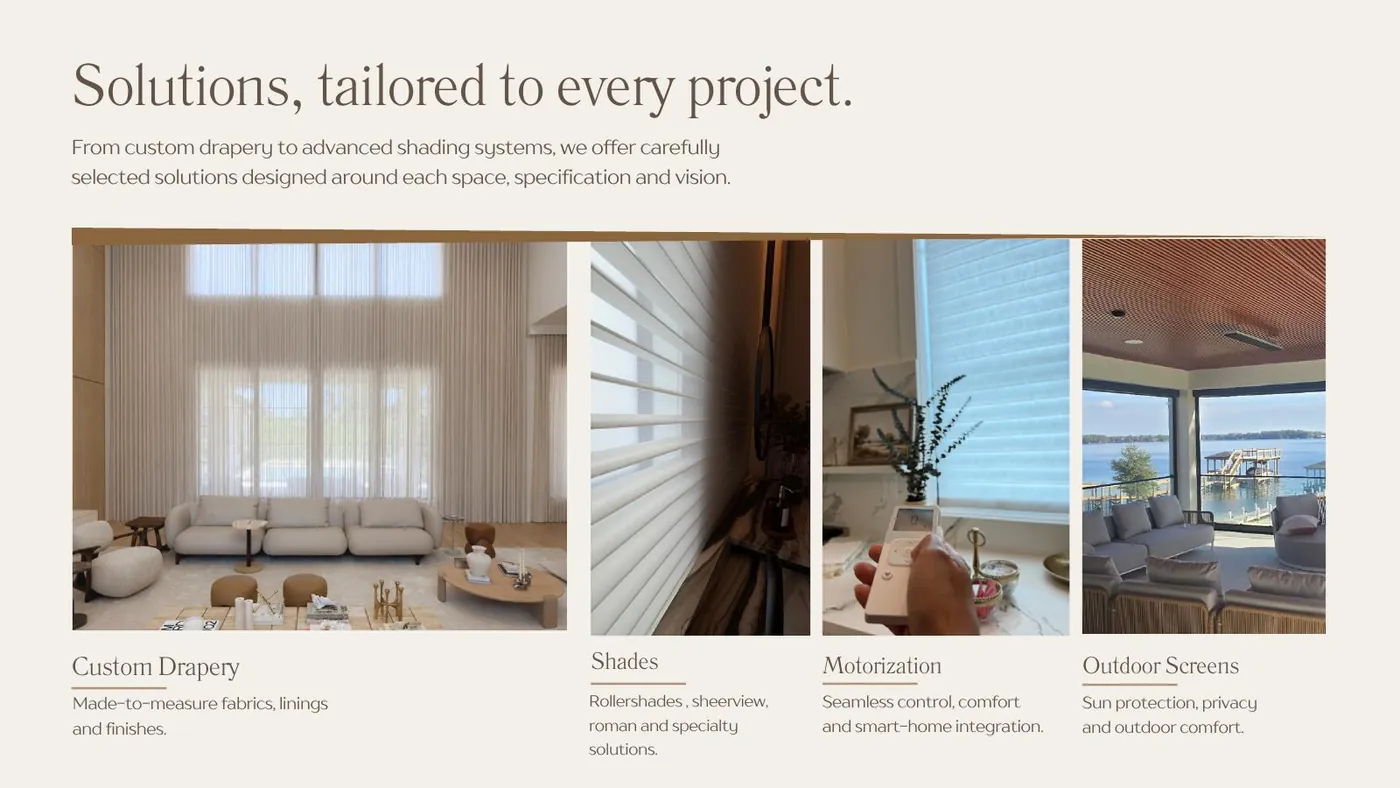
A second guide was written for the sales consultants of a partner furniture store, so they could explain custom window treatments to their own clients and refer them with confidence. It covers what each solution does, how to read a client’s needs and how the process works from consultation to installation.

Research for a new channel.
Market research for an Etsy shop concluded that the brand should not compete with cheap ready-made curtains. The recommendation was to launch a single product, a custom linen pinch-pleat panel, and sell what sets My Walls apart, a designer finish in a format people can buy online. The shop is still being prepared.
06 / Experience
The brand in the client’s hands.
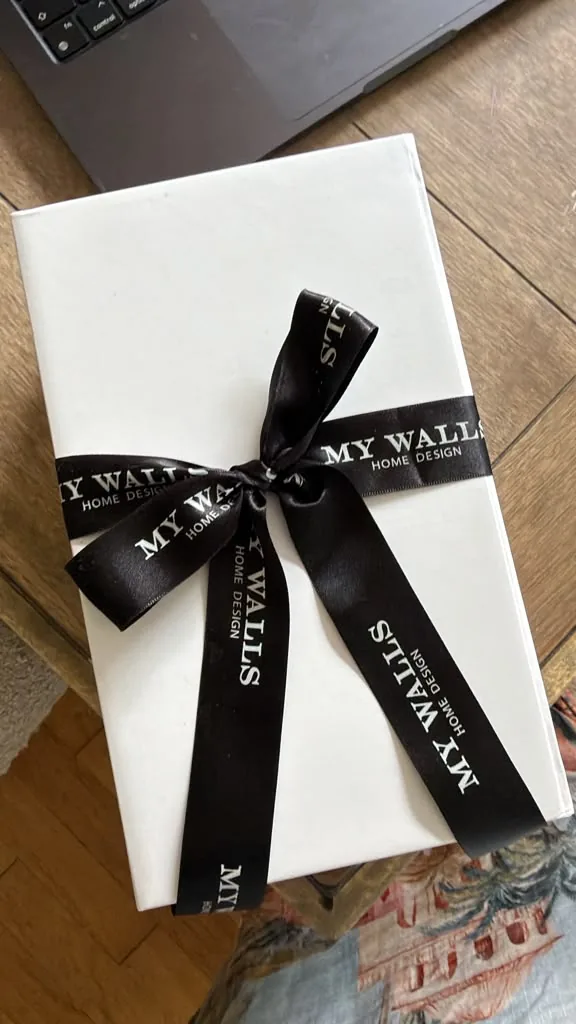
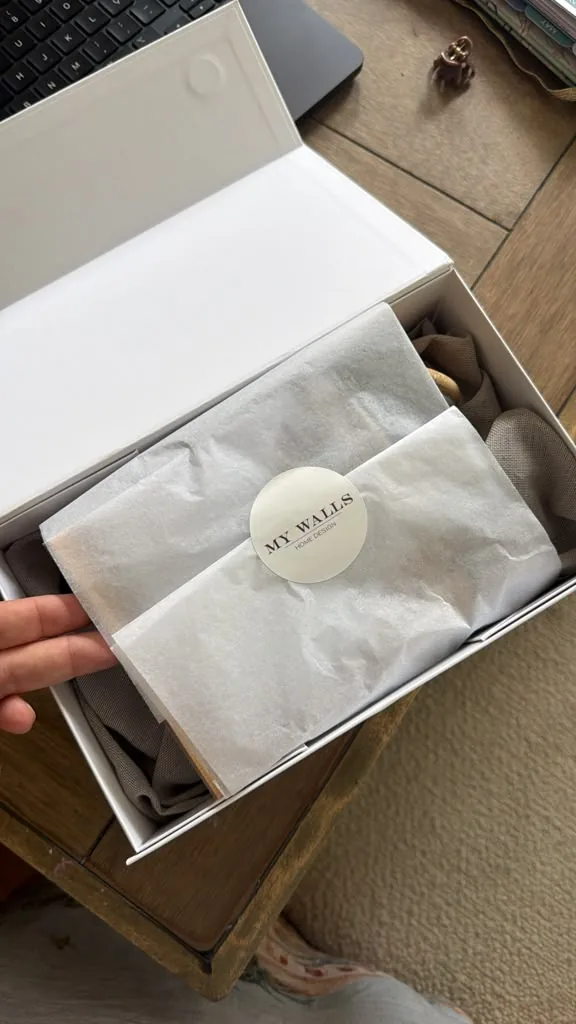
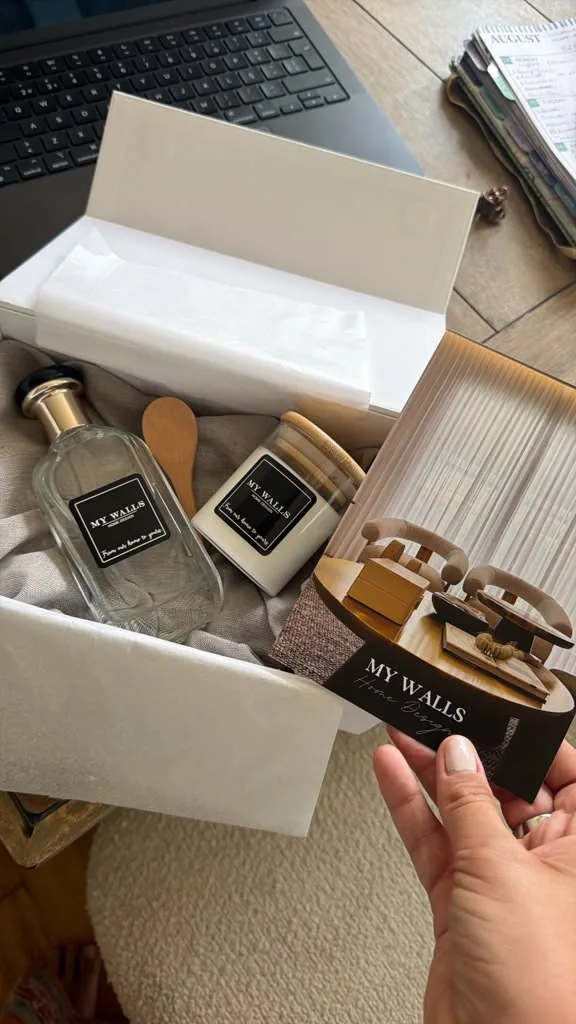
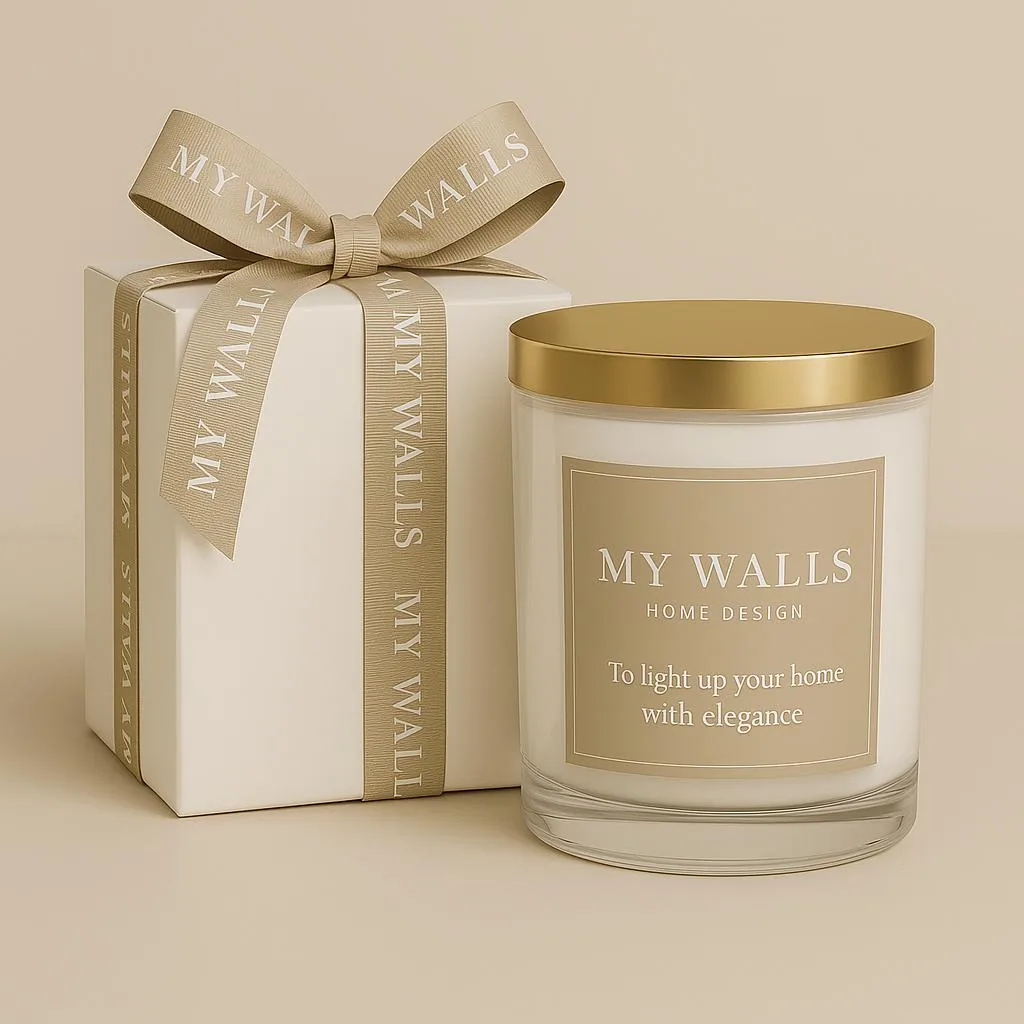
The identity moved off the screen and into the objects a client touches: a white box closed with a printed ribbon and a sticker, a candle and a room fragrance inside, a hang tag that sums up the service on the fabric itself. These pieces are in use today.
What comes next.
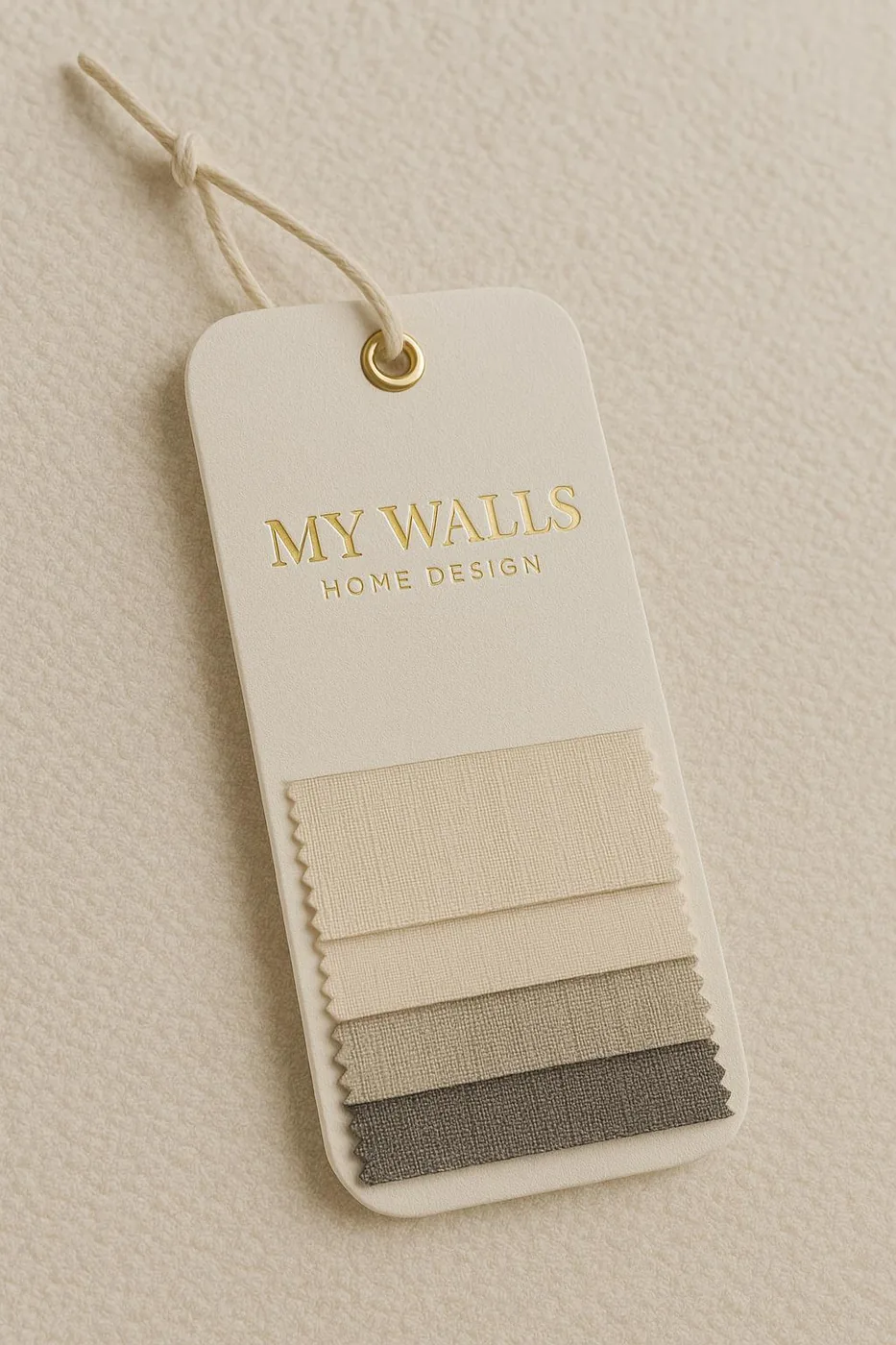
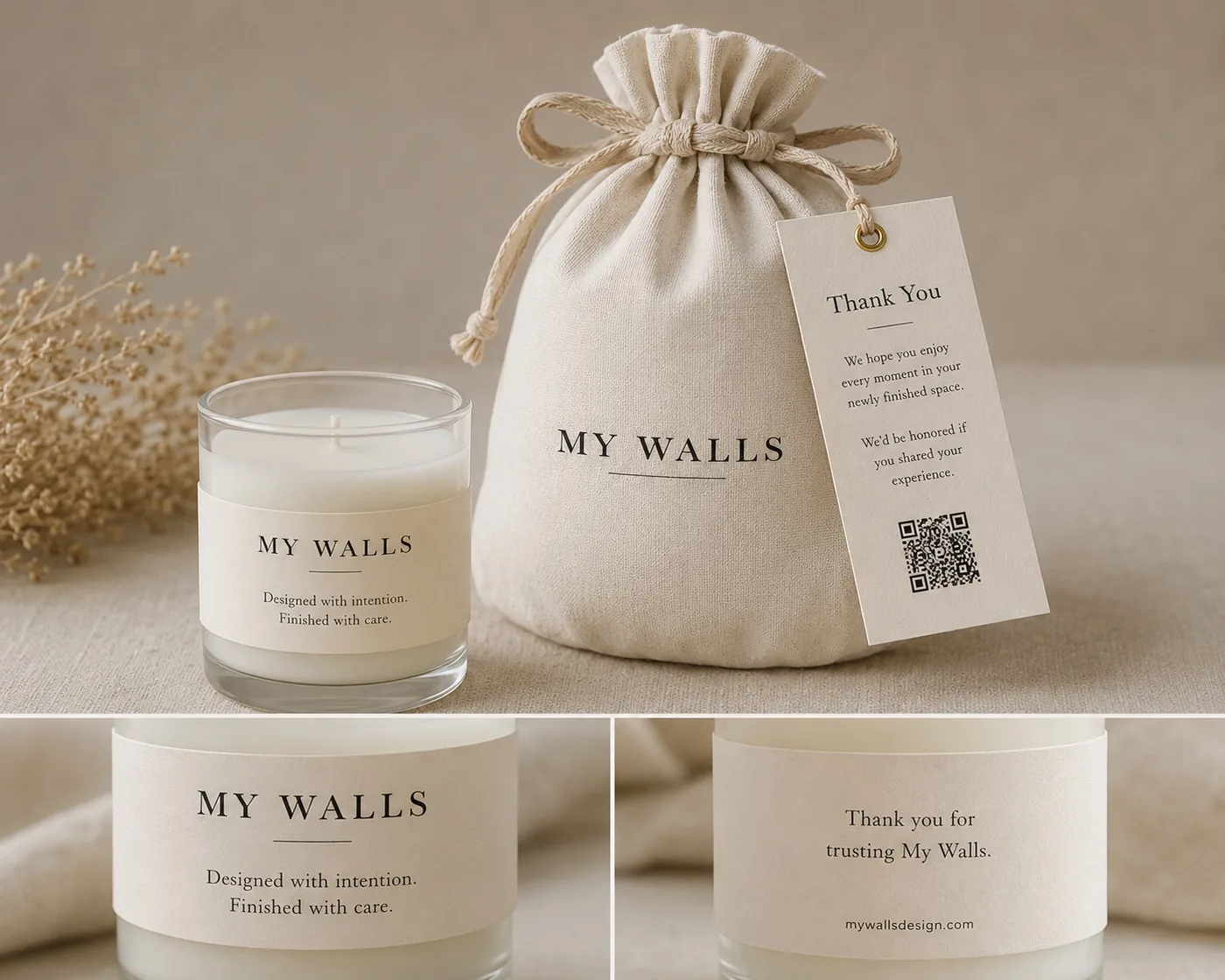
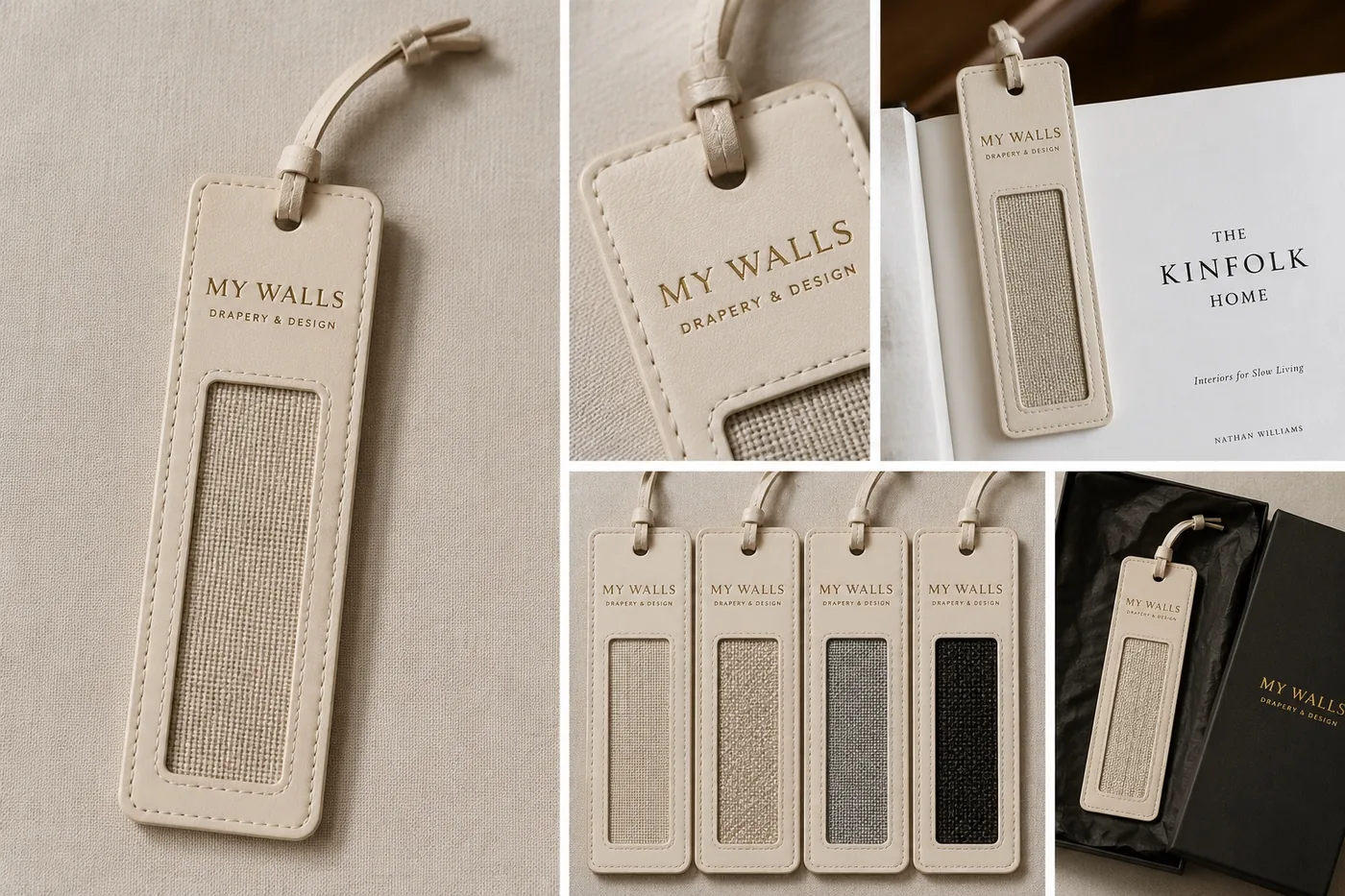
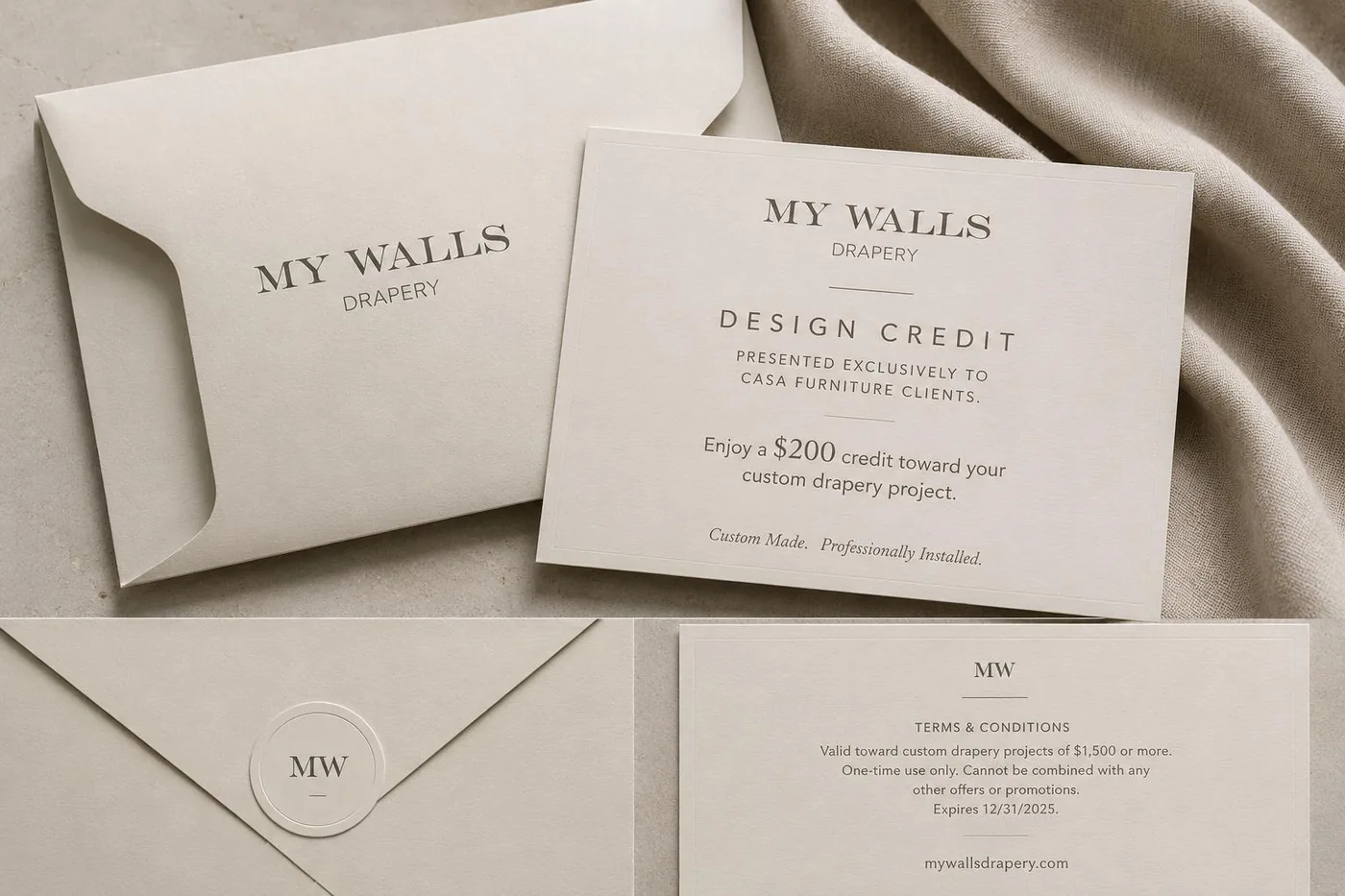
Further pieces were designed as proposals to take the experience further, from leather-framed fabric samples and a branded sample hanger to a thank-you kit with a review QR code and a design credit for clients of a partner store. They are shown here as mockups.
07 / Results
- +157%followers, from 1,599 to 4,105
- 625posts, up from 324
- 20.2Kviews in the 30 days before the latest snapshot
- 6fronts carrying one brand language by 2026
The numbers come from two profile snapshots taken in 2023 and 2026. They show where the account stands, not a month-by-month record, and the growth also reflects the founder’s own work and referrals. What the case shows most clearly is how far one brand language travelled, from the first post to the box a client opens at home.